
Welcome to this fascinating exploration of China’s military stance on artificial intelligence (AI) in battlefield decision-making. This article delves into the intricate balance between human judgment and AI capabilities, highlighting the importance of human oversight in military operations. Join us as we uncover the nuances of this delicate dance between technology and human ingenuity.
The People’s Liberation Army emphasizes the importance of human judgment in military operations.
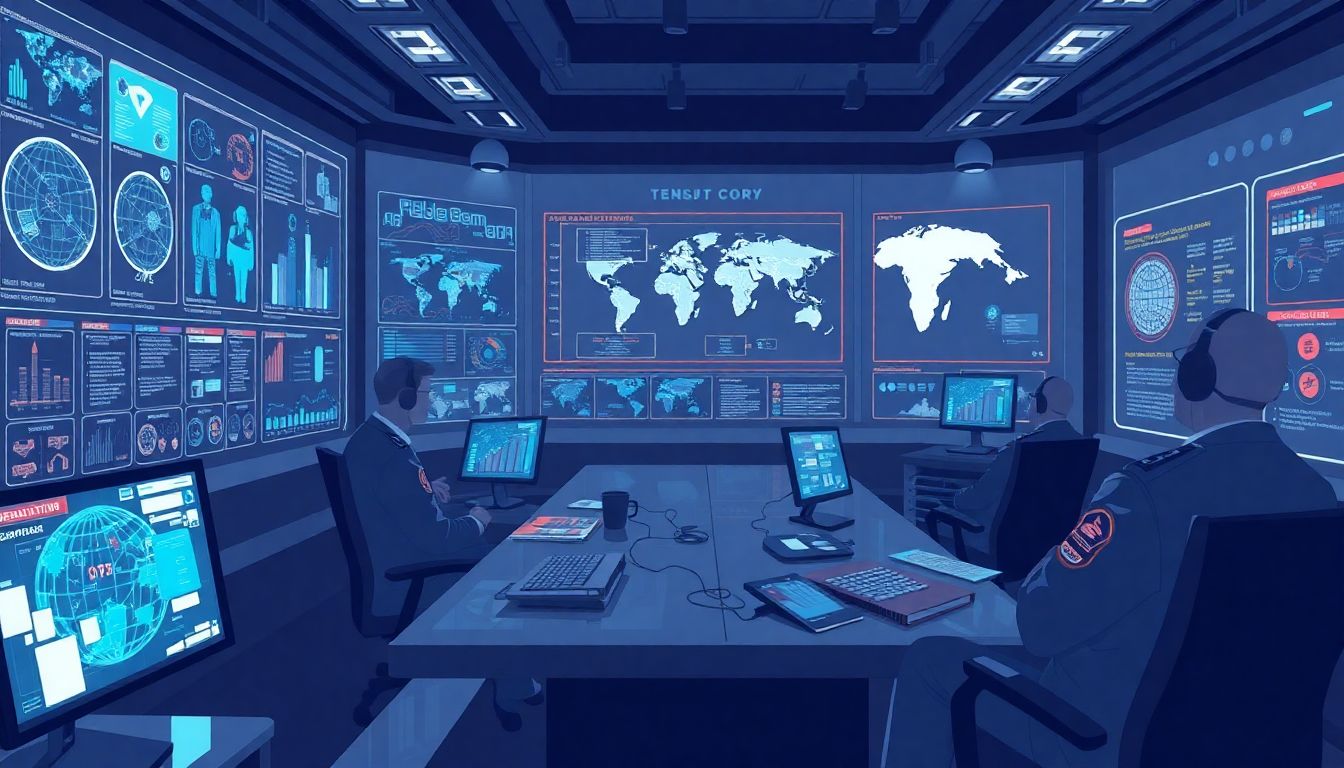
In the sprawling theatre of tomorrow’s warfare, a symphony of humans and machines unfolds, painting a spectacle that is as much a testament to technological prowess as it is to the enduring necessity of human intuition. The battlefield hums with the ceaseless activity of AI-driven systems—swarms of drones dance in the sky, their movements precise and coordinated, while autonomous ground vehicles navigate the terrain with unerring precision. At the heart of this mechanized ballet stand human commanders, ensconced in state-of-the-art control centers that pulse with data streams and holographic interfaces. Their role is not diminished but evolved, with the power to oversee, direct, and if necessary, override the AI’s decisions.
The collaboration between humans and machines is not a simple case of one outshining the other but a intricate dance where each brings its unique strengths to the table. The AI excels in processing vast amounts of data, predicting enemy movements with uncanny accuracy, and executing complex maneuvers with split-second precision. Yet, it is the human commander who brings an invaluable element to the equation: contextual understanding, adaptability, ethical judgment, and a willingness to question the supposed infallibility of algorithms. This interdependence signifies a future where warfare is not solely the domain of machines, but a hybrid endeavor, where human insight and machine efficiency coalesce into a formidable force.
The Role of AI in Military Operations
AI in military operations is a double-edged sword that is revolutionizing strategic planning, data analysis, and simulations, while also presenting significant limitations in replacing human decision-making.
Firstly, let’s examine the capabilities of AI. It excels in data analysis, swiftly processing vast amounts of intelligence data to identify patterns, predict trends, and detect anomalies that humans might miss. AI algorithms can fusion data from various sources like satellites, drones, and sensors, providing a comprehensive picture of the operational environment. Moreover, AI-driven simulations enable military units to train in realistic virtual environments, enhancing their preparedness for real-world scenarios. AI can also aid in planning by generating multiple courses of action, predicting their outcomes, and suggesting the most effective ones. Notably, AI’s capabilities extend to autonomous systems, like drones and unmanned ground vehicles, which can perform dangerous tasks, reducing human casualties. Some of the most impressive AI capabilities in military operations include:
- Rapid data processing and analysis
- Predictive maintenance for equipment
- Enhanced situational awareness
- Autonomous systems for dangerous tasks
- Adaptive training and realistic simulations
However, AI is not infallible, and its limitations must be acknowledged. While AI can provide data-driven recommendations, it lacks human intuition, ethical understanding, and contextual comprehension. AI algorithms are trained on historical data, which may not account for the unpredictability and uncertainty of warfare. Moreover, AI systems can be deceived or disrupted by adversarial attacks, such as data poisoning or model inversion. Most critically, AI should not replace human decision-making, especially in life-and-death situations. A human commander understands the nuances of mission objectives, the value of human life, and the potential consequences of actions taken. AI, on the other hand, operates based on pre-programmed rules and optimizations, lacking the ability to truly understand and weigh the ethical implications of its suggestions. To ensure responsible AI usage in military operations, it’s crucial to:
- Maintain human oversight and final decision-making authority
- Continuously test and validate AI systems
- Develop robust AI countermeasures
- Foster AI ethics education and training
- Encourage international cooperation and guidelines for military AI
Human Autonomy and Creativity on the Battlefield
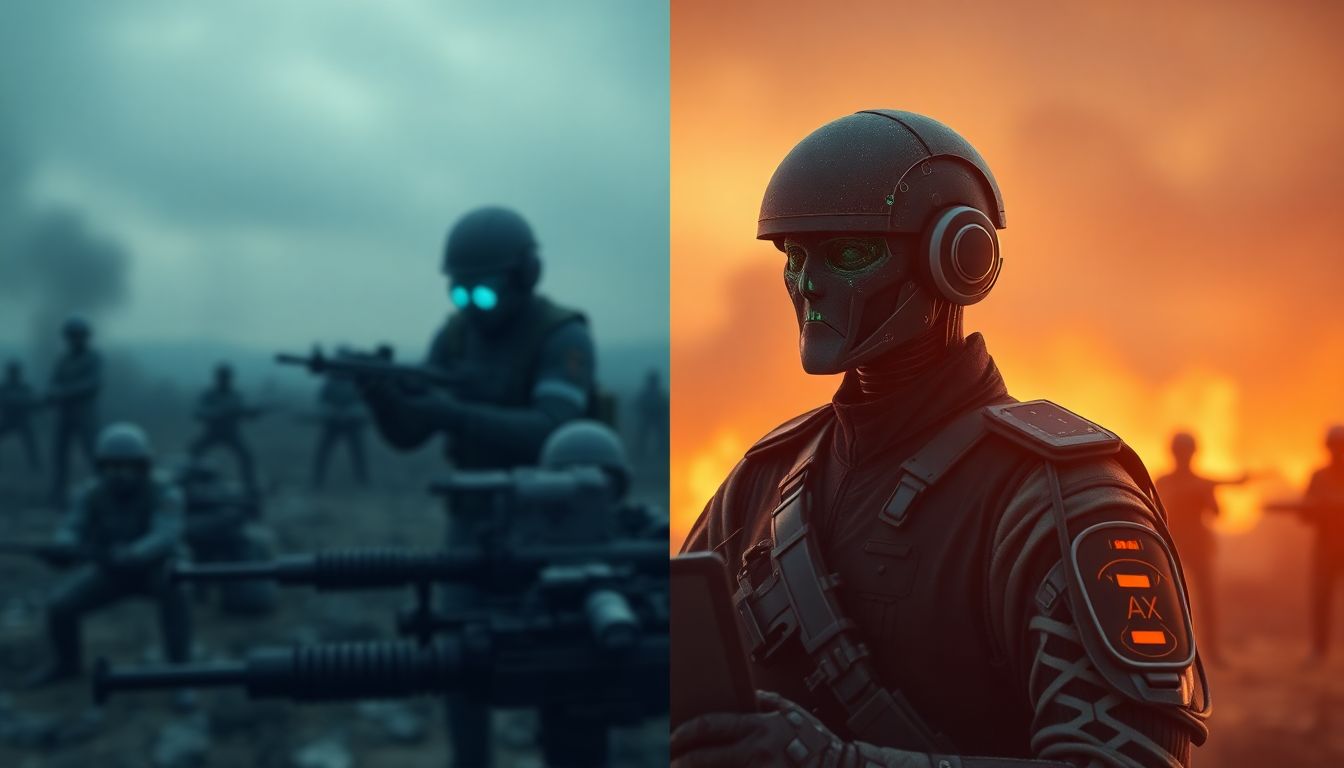
In the theatre of war, human autonomy and creativity have historically been indispensable, offering a blend of adaptability, ethical understanding, and unpredictability that has been critical in battlefield scenarios. Human beings possess an innate ability to assess complex situations and respond with innovative solutions that may defy conventional logic. This quality is often referred to as ‘thinking outside the box,’ a trait that is challenging to replicate through algorithms. Humans can also grapple with the ethical dilemmas that often arise in war zones, making judgement calls that prioritize humanitarian concerns alongside military objectives. Furthermore, human autonomy ensures that decisions are not merely data-driven but also informed by intuition and empathy, elements that are vital in navigating the intricacies of conflict.
On the other hand, Artificial Intelligence (AI) brings its own set of advantages to the battlefield, offering unmatched speed and precision in data processing and analysis. AI can handle vast amounts of information simultaneously, providing real-time insights that human beings might miss. This makes AI particularly useful in scenarios requiring rapid decision-making and multitasking. Additionally, AI is not subject to the same emotional and physical fatigue as humans, allowing it to maintain consistent performance over extended periods. However, AI operates within algorithmic boundaries, meaning its decisions are based on pre-set parameters and available data. This can limit its ability to think creatively or adapt to unexpected situations that fall outside its programming.
Comparing the two, it is evident that both human qualities and AI capabilities have their unique strengths and weaknesses. While AI excels in areas requiring swift, data-driven decisions, it falls short in situations that demand ethical considerations, empathy, and creative problem-solving. Humans, on the other hand, may struggle with the sheer volume and speed of data processing but excel in making nuanced judgments based on a broader understanding of context and ethics. To leverage the best of both worlds, militaries may need to adopt a hybrid approach, where AI supplements human decision-making rather than replacing it. This could involve using AI for tasks like data analysis and logistical planning, while leaving strategic and ethical decisions to human personnel. Such a balance could enhance overall effectiveness in battlefield scenarios, ensuring that both technological prowess and human intuition are utilized optimally.
- Human autonomy and creativity offer adaptability, ethical understanding, and unpredictability.
- AI provides speed, precision, and consistency in data processing and analysis.
- A hybrid approach, combining AI and human decision-making, could optimize battlefield effectiveness.
The Preferred Model: Humans Plan, AI Executes
The People’s Liberation Army (PLA) advocates for a distinctive model of human-AI collaboration, where humans are responsible for developing strategic frameworks while AI handles their execution. This approach leverages the strengths of both entities: human intuition, creativity, and ethical judgment for strategic planning, and AI’s precision, speed, and data-processing capabilities for implementation. By dividing responsibilities in this manner, the PLA aims to enhance operational efficiency and effectiveness while maintaining human control over critical decisions.
One of the key positives of this model is the assurance of human oversight and accountability. As humans retain the role of strategists, they can ensure that ethical considerations, cultural nuances, and long-term goals are adequately addressed—areas where AI currently lacks proficiency. Additionally, this model allows for continuous learning and improvement, as humans can analyze AI’s execution outcomes to refine future strategies. Here are some of the notable benefits:
- Ensures ethical and culturally sensitive decisions
- Maintains human accountability
- Promotes continuous learning and improvement
However, several negatives or challenges must also be considered. The success of this model hinges on the competency of human strategists, making it vulnerable to human biases, errors, and potential misjudgments. Moreover, the division of labor may lead to a lack of situational awareness on the part of the AI, as it primarily focuses on execution rather than understanding the strategic context. Lastly, this model might inadvertently hinder the development of more advanced AI capabilities that could potentially provide valuable insights during the strategic planning phase. Some of the drawbacks include:
- Dependence on human competency and potential for biases/errors
- Potential lack of situational awareness in AI
- Possible hindrance to advanced AI capability development
FAQ
Why does the PLA emphasize human decision-making over AI?
- Humans can dynamically respond to situations and exploit enemy weaknesses.
- AI operates within predefined algorithms and lacks originality.
- Human commanders can take responsibility for their actions and refine plans as needed.
What is the PLA’s preferred model for human-AI collaboration?
How does China view the regulation of military AI?
What are some of the PLA’s investments in AI for military purposes?
- Autonomous vehicles
- Predictive maintenance
- Automated target recognition
- Submarine drones
- AI-boosted sensors for missile accuracy
- AI for war games and training
