
Welcome to this insightful exploration of China’s military stance on the role of artificial intelligence (AI) in battlefield decision-making. This article delves into the nuanced perspective of the People’s Liberation Army (PLA) on the limitations and strengths of AI, emphasizing the irreplaceable human element in military strategy. Join us as we uncover the intricacies of this fascinating topic, blending technology and human ingenuity in the realm of modern warfare.
The People’s Liberation Army emphasizes the importance of human judgment in military operations, highlighting the limitations of AI in strategic decision-making.
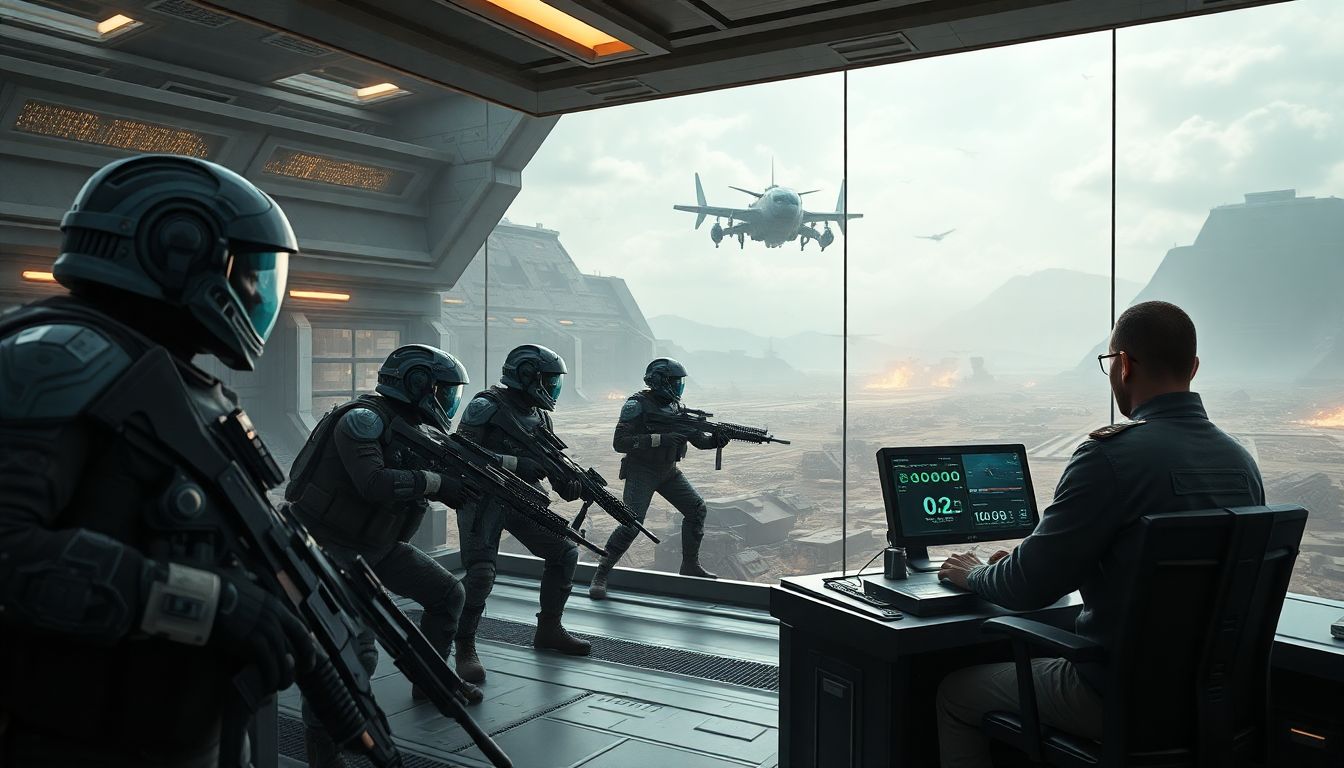
Imagine a sprawling landscape decimated by the relentless march of war, where the air is thick with the hum of advanced machinery and the eerie silence of AI-coordinated tactics. This is the battlefield of the future, teeming with soldiers clad in exosuits that enhance their strength and agility, equipped with smart weapons that calculate trajectories and adjust to environmental factors in real-time. AI-powered drones swarm the skies, providing reconnaissance and air support, while autonomous ground vehicles navigate treacherous terrain, supplying troops and evacuating casualties with precision.
Back at the command center, a high-tech control room hums with quiet efficiency. A human commander, the heart and mind of the operation, oversees the battle from a sprawling interactive holographic map. Walls lined with screens display real-time data feeds, biometric readouts, and AI analyses, providing a comprehensive view of the situation. The commander’s decisions are augmented by AI suggestions, but the ultimate responsibility rests on their shoulders, blending the best of human intuition and machine intelligence in a futuristic symphony of warfare.
The Role of AI in Modern Warfare
Artificial Intelligence (AI) has emerged as a powerful tool capable of augmenting human capabilities in various domains, particularly through data analysis, simulations, and planning. AI’s ability to process and analyze vast amounts of data quickly and accurately enables it to identify patterns, trends, and anomalies that humans might miss. This capability is particularly useful in scenarios where rapid decision-making is crucial, such as in military contexts. By sifting through complex data sets, AI can provide insights that inform situational awareness, risk assessment, and strategic planning.
However, while AI’s capabilities are impressive, they are not without limitations. AI systems rely on the quality and relevance of the data they are trained on, a concept known as ‘garbage in, garbage out.’ Moreover, AI lacks human-like intuition, creativity, and ethical judgment, which are critical in high-stakes decision-making processes. This is why AI should be seen as an augmentative tool rather than a replacement for human judgment. AI can present likely scenarios, predict outcomes, and suggest courses of action, but the final call should always be made by humans, who can consider the broader context and ethical implications.
In the military realm, AI can significantly enhance decision-making processes without replacing human judgment. Here’s how:
-
Rapid Data Analysis:
AI can swiftly process and analyze data from various sources like satellites, sensors, and intelligence reports to provide real-time insights.
-
Wargaming and Simulations:
AI can run complex simulations to predict enemy movements, evaluate potential strategies, and identify vulnerabilities.
-
Operational Planning:
AI can generate and evaluate multiple course of actions, helping military planners to develop more robust and adaptable plans.
-
Force Multiplier:
By taking over routine tasks and providing decisive insights, AI can improve the efficiency and effectiveness of military operations, essentially acting as a force multiplier.
Nevertheless, the responsibility for making the final, critical decisions should remain with human commanders who possess the ultimate contextual understanding and ethical responsibility.
Human Autonomy and Creativity
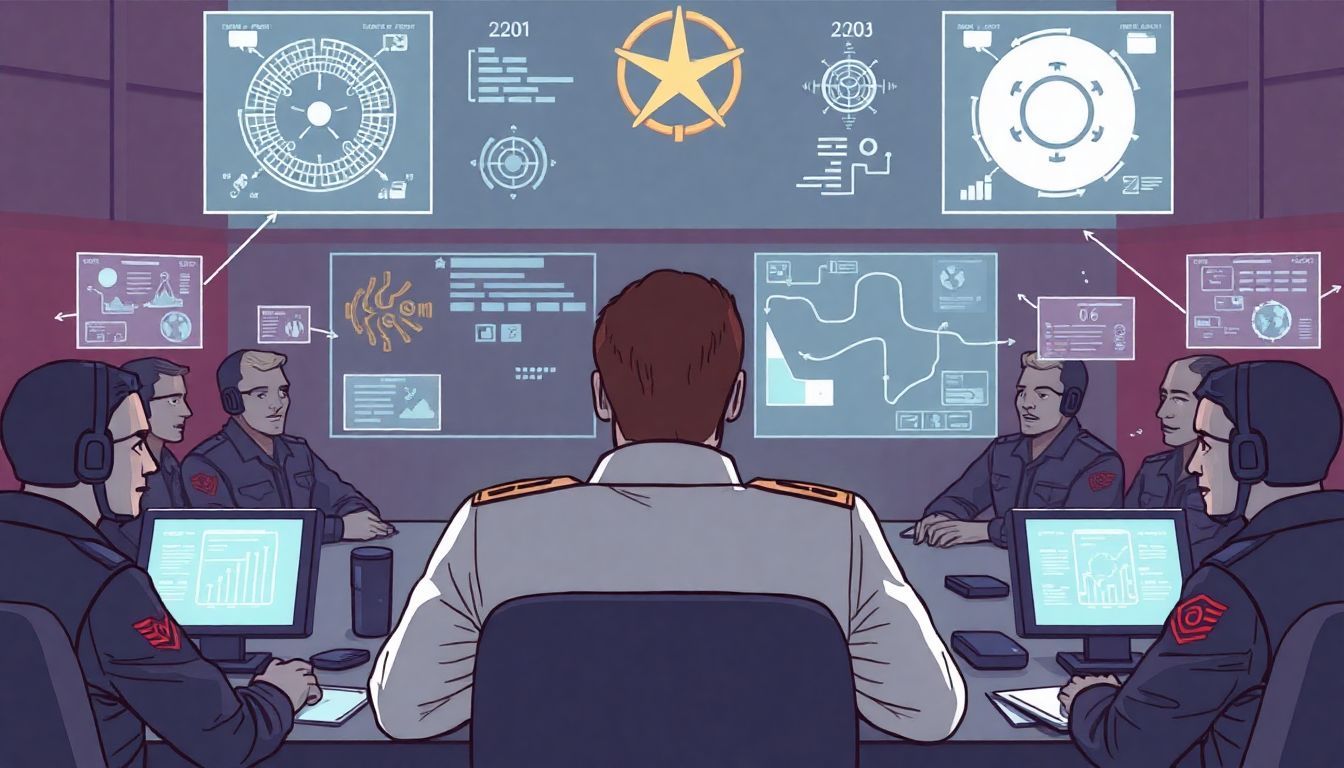
In the ever-evolving landscape of modern warfare, the indispensable role of human autonomy and creativity cannot be overstated. While Artificial Intelligence (AI) has revolutionized numerous aspects of battlefield operations, such as data analysis, predictive maintenance, and even autonomous systems, it is the human element that ultimately tips the scales in favor of victory. Human commanders bring to the table an intrinsic understanding of ethics, contextual nuances, and strategic foresight that AI, bound by its algorithmic constraints, has yet to fully replicate.
The dynamic response capabilities of human commanders are multifaceted and adaptable, qualities that are challenging for AI to emulate. Humans possess the unique ability to pivot strategies in real-time, responding to unforeseen variables and emotional cues that AI might overlook. This adaptability is crucial in battlefield situations where split-second decisions can mean the difference between success and failure. Moreover, human creativity fosters innovative problem-solving, allowing commanders to devise unconventional tactics that can catch adversaries off guard. AI, on the other hand, operates within predefined parameters, which can limit its effectiveness in scenarios that require out-of-the-box thinking.
However, it is essential to acknowledge the synergistic potential of AI and human collaboration. AI excels in processing vast amounts of data quickly and accurately, providing commanders with valuable insights and predictions. This capability can significantly enhance situational awareness and inform decision-making processes. Nevertheless, the final call should rest with human commanders, who can integrate these insights with their intuition, experience, and ethical considerations. In summary, while AI brings unprecedented capabilities to the battlefield, the irreplaceable role of human autonomy and creativity ensures that the human factor remains the cornerstone of effective command and control.
- AI’s strengths in data processing and predictive analysis
- Limitations of AI in ethical decision-making and contextual understanding
- The crucial role of human intuition, experience, and adaptability

The Preferred Model: Humans Plan, AI Executes
The People’s Liberation Army (PLA) has shown a strong preference for a model of ‘humans plan and AI executes’ in their approach to integrating artificial intelligence into military operations. This strategy leverages human intelligence for strategic decision-making while delegating tactical execution to AI systems. By employing AI in this manner, the PLA aims to enhance operational efficiency, reduce human error, and achieve faster reaction times.
AI systems, with their ability to process vast amounts of data and generate responses swiftly, offer significant advantages in the rapidly evolving battlefield. However, relying solely on AI for both planning and execution can pose substantial risks. Key concerns include:
- The potential for catastrophic errors due to AI’s lack of contextual understanding and common sense reasoning.
- The risk of adversarial attacks exploiting AI systems’ vulnerabilities.
- The possibility of unpredictable behaviors stemming from AI’s self-learning capabilities.
To mitigate these risks, human oversight becomes crucial.
Human oversight plays a pivotal role in ensuring accountability and strategic adaptability. By maintaining a human-in-the-loop, the PLA can:
- Guarantee that strategic decisions align with overall military objectives and ethical standards.
- Enable real-time adjustments based on changing battlefield conditions, which AI systems might struggle to adapt to independently.
- Facilitate learning and improvement from AI’s execution outcomes, fostering a symbiotic relationship between humans and AI.
Moreover, human oversight ensures that there is a clear responsible entity in cases where AI-driven operations go awry, promoting accountability. While the ‘humans plan and AI executes’ model presents promising avenues for augmenting military capabilities, it is essential to recognize the importance of striking a balance between AI integration and human judgment to ensure safe, effective, and responsible military operations.
