
Welcome to a pivotal moment in the music industry! In 2024, artificial intelligence (AI) didn’t just knock on the door of the music world; it kicked it wide open. This year marked a significant shift as record labels, once staunch opponents of AI-generated music, began to explore the potential of AI tools. However, the integration of AI into music production has sparked intense debates about ethical and legal boundaries. Join us as we delve into this transformative year, examining who stands to gain and who might lose in the AI-music revolution.
The Year AI Broke Into Music
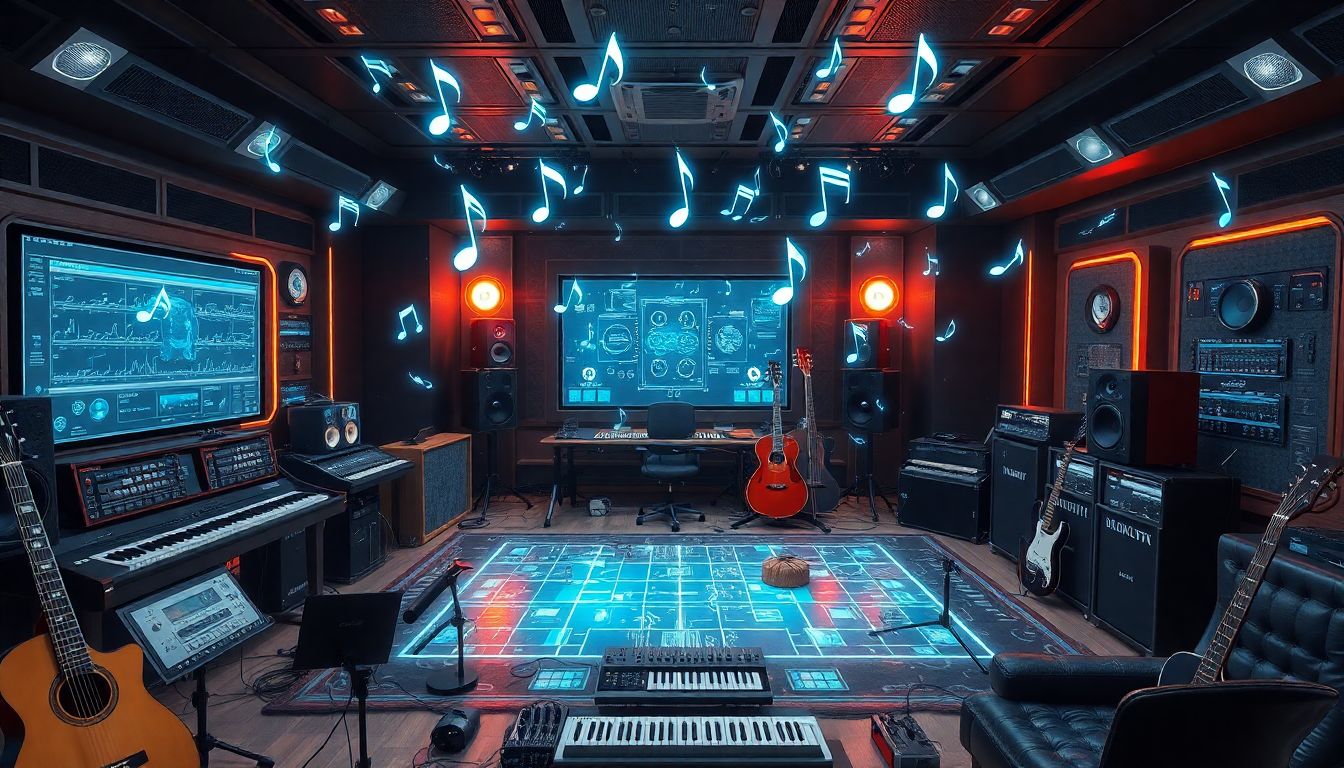
Imagine stepping into a futuristic music studio, where the air is filled with a symphony of AI-generated musical notes, visually represented as floating, luminescent orbs dancing around a sprawling digital interface. This interface is not just a screen, but a three-dimensional space where musical notes can be touched, moved, and manipulated in real-time. The studio is a harmonious blend of the old and the new, with traditional instruments like grand pianos and vintage guitars sharing space with cutting-edge tech gadgets. A holographic lyric sheet unfurls itself above a state-of-the-art mixing console, while AI-driven robotic arms are fine-tuning a violin’s strings in the corner.
The heart of the studio is an AI conductor, an advanced algorithm that can compose, arrange, and produce music in an endless array of styles and genres. It’s not just a tool, but a collaborator, learning from and adapting to the human musicians in the room. The walls are lined with dynamic soundproof panels that can alter the room’s acoustics at the press of a button, transforming the studio into a cathedral one moment and an intimate jazz club the next. Virtual reality headsets hang from the ceiling, offering immersive experiences of different performance venues. The studio is not just a place to record music, but a living, breathing, artificially intelligent ecosystem where creativity knows no bounds.
The AI Awakening
The initial resistance from record labels towards AI-generated music was marked by skepticism and protective instincts towards traditional music creation processes. Record labels viewed AI as a potential disrupter that could devalue human artistry, lead to job losses, and present complex copyright issues. They were concerned about the authenticity of AI-generated music and the possible dilution of the artistic brand they had cultivated. Technological limitations of early AI tools, which often produced bland or unoriginal compositions, further cemented this resistance.
The turning point came with rapid advancements in AI technologies, particularly machine learning algorithms that could analyze vast amounts of musical data to generate more sophisticated and emotionally resonant compositions. Key events included high-profile experiments and collaborations between AI and human artists that garnered significant public attention and critical acclaim. Notably, the release of the album “I AM AI” by Taryn Southern in 2018, which was entirely composed using AI tools, demonstrated the commercial viability of AI-generated music. Additionally, the development of platforms like AIVA (Artificial Intelligence Virtual Artist) and Amper, which allowed for more nuanced and user-controlled musical outputs, assuaged some of the industry’s concerns. The shift was also facilitated by the growing acceptance of AI in other creative industries, such as film and visual arts, which provided a broader context for the potential benefits of AI integration.
Ethical and Legal Dilemmas
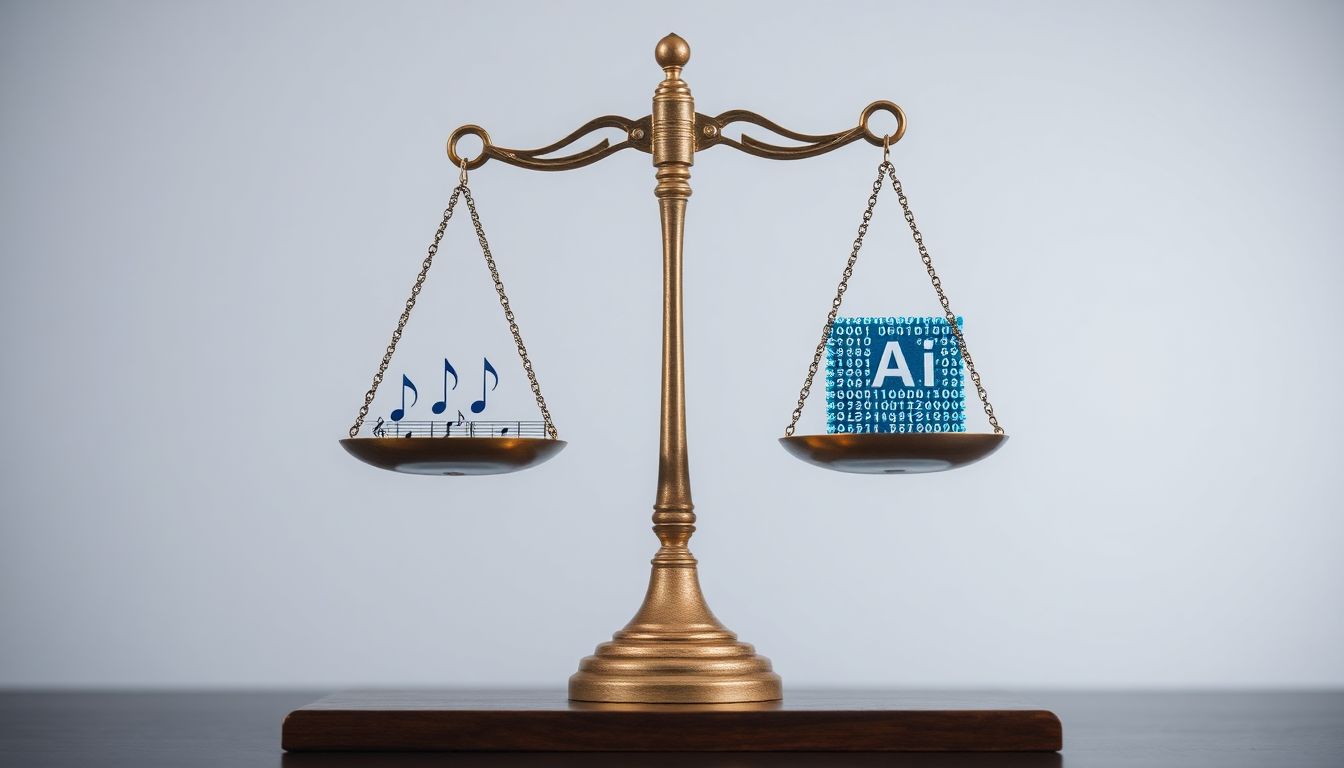
The integration of AI in music production presents a complex web of ethical and legal challenges that the industry is only just beginning to navigate. One of the most pressing issues is that of copyright and royalties. If an AI generates a substantial portion of a song, who owns the rights to that music? Current copyright law is ill-equipped to handle such questions, as it typically assumes a human author. Moreover, the distribution of royalties becomes equally complex. For instance, if an AI creates a hit song, who should receive the royalties—the AI itself, the AI’s developers, or the human musicians who may have contributed to the process? These questions lack clear answers and will likely require significant legal and regulatory intervention to resolve.
Beyond legal concerns, the impact on human musicians and producers cannot be overlooked. While AI can democratize music production by making it more accessible, it also poses significant threats to the livelihoods of industry professionals. Here are a few key points to consider:
-
Job Displacement:
AI could automate many tasks traditionally performed by human musicians and producers, leading to job losses in the industry.
-
Creative Authenticity:
There’s a risk that over-reliance on AI could lead to homogenized music, lacking the unique personal touch that human creators bring.
-
Skill Devaluation:
If AI can create music just as well as humans, the value placed on human musical skills could decrease, further exacerbating job losses.
To ensure a balanced integration of AI, it’s crucial to foster a collaborative environment where AI augments rather than replaces human creativity. This may involve rethinking educational approaches, industry practices, and regulatory frameworks to promote a harmonious coexistence of AI and human artists.
Voices from the Industry
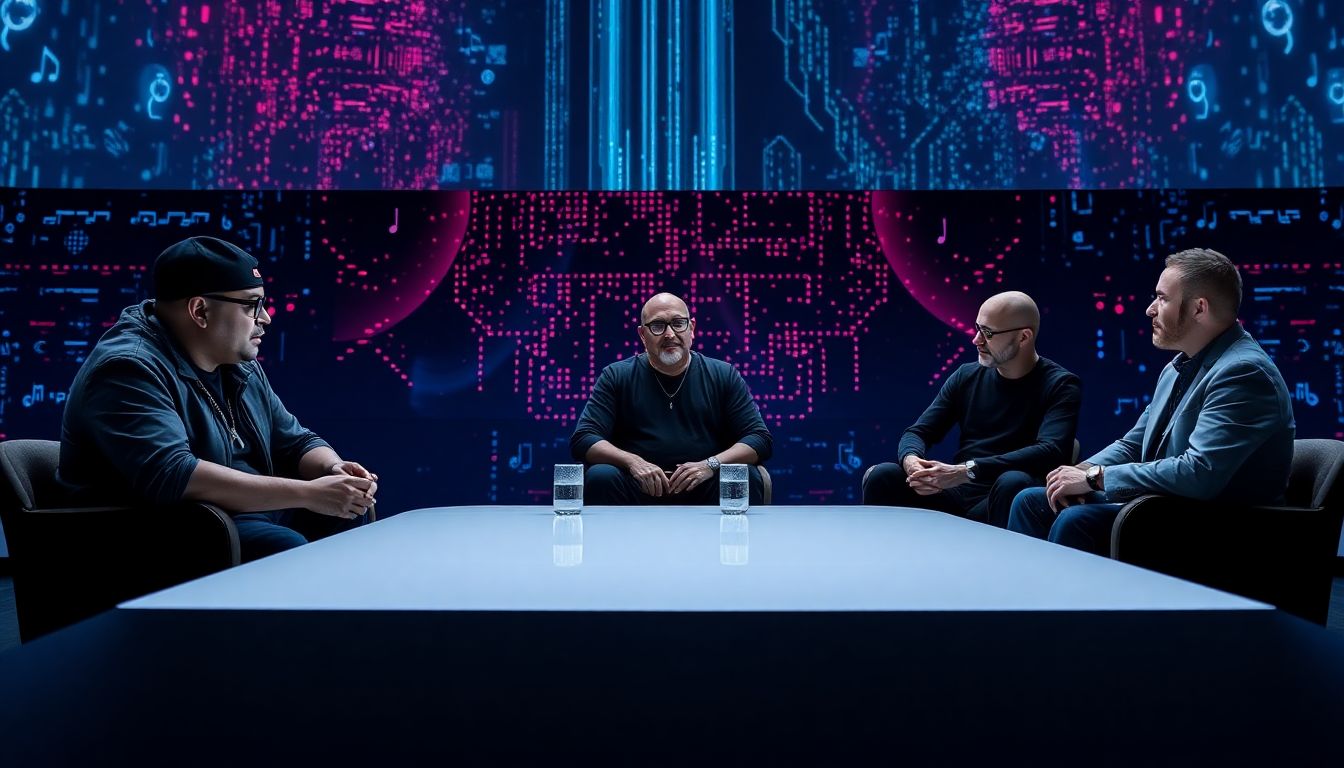
Industry experts have begun to weigh in on the complex role of AI in music, providing nuanced perspectives on its benefits and drawbacks. Grammy Award-winning producer Timbaland has expressed enthusiasm for AI’s potential to revolutionize music production. He notes that AI can act as a powerful tool for inspiration and creativity, offering artists and producers new sounds and patterns that might otherwise go undiscovered. Timbaland has also highlighted AI’s ability to democratize music production, making professional-quality tools more accessible to aspiring musicians.
Universal Music Group executive Michael Nash, however, strikes a more cautious note. While acknowledging AI’s potential, Nash warns of several drawbacks. These include:
- Potential job displacement in the music industry, as AI might automate certain roles.
- Over-reliance on AI, which could lead to a homogenization of sound, stifling the unique perspectives that drive innovation in music.
- Copyright and royalty concerns, as it remains unclear how AI-generated music should be credited and compensated.
Looking ahead, both experts predict significant changes. Timbaland envisions a future where AI is a standard tool in every producer’s arsenal, while Nash foresees a more regulatory environment, with guidelines ensuring that AI augments rather than replaces human creativity.
FAQ
What are the main advantages of using AI in music production?
- Increased efficiency and speed in creating and editing music.
- The ability to generate unique and innovative sounds.
- Potential for personalized music experiences.
- Access to vast databases of musical styles and genres.
How does AI impact the roles of traditional musicians and producers?
What are the ethical considerations surrounding AI-generated music?
- Ensuring that AI-generated music respects the originality and creativity of human artists.
- Addressing issues of plagiarism and unauthorized use of existing musical works.
- Ensuring fair compensation for all contributors, including AI developers and human musicians.
What legal challenges does AI present in the music industry?
- Determining ownership and copyright of AI-generated music.
- Navigating royalty distribution and licensing agreements.
- Establishing clear guidelines for the use of AI tools in music production.
