
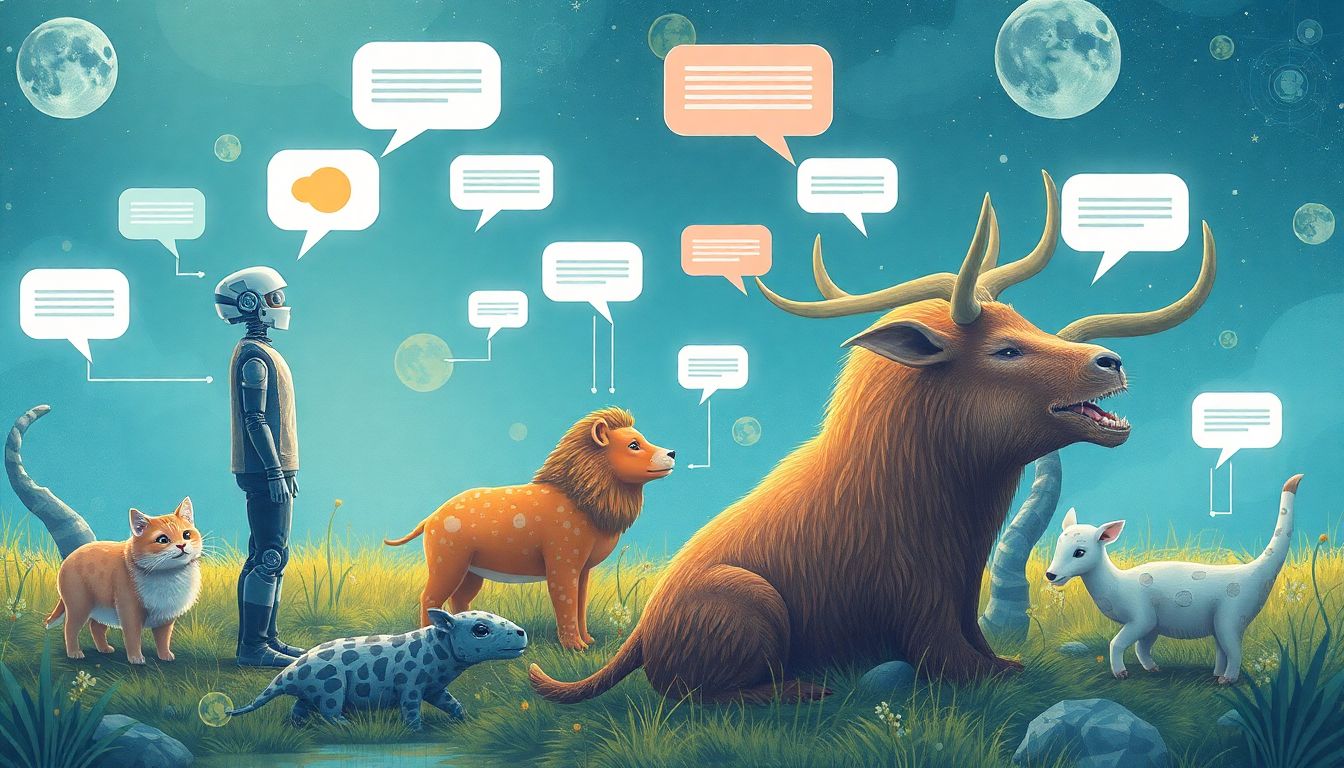
Welcome to this fascinating exploration of how AI is bridging the communication gap between humans and animals. In this article, we’ll delve into the innovative work being done by the Earth Species Project and their groundbreaking AI system, NatureLM. Join us as we discover the potential implications of understanding animal languages, the challenges faced, and the broader applications of AI in addressing planetary concerns.
Unlocking the secrets of animal communication with artificial intelligence.
In the heart of a lush, verdant forest, a glimpse into the future unfolds with humans intertwined among the foliage, equipped with advanced AI technology that blur the lines between species. A woman, adorned with a sleek, biomorphic device around her neck, sits cross-legged near a stream, engaged in an animated conversation with a family of deer. Speech bubbles, visible only to the AI-assisted humans, float above the animals, translating their body language and vocalizations into human-readable language. Data streams, resembling ethereal, glowing tendrils, connect the humans and animals, pulsating with information exchanged between the AI and the natural world.
The AI, an advanced descendant of today’s rudimentary chatbots and language models, has evolved to understand and translate the nuances of animal communication. It deciphers the chirps of birds, the body language of bears, and the complex symphonies of whales, bridging the gap between human language and the myriad forms of animal expression. The data streams, a visual representation of this intricate dance of information, flutter and wave like auroras, painting a mesmerizing picture of harmonious coexistence.
A man, perched on a branch high above the forest floor, chats with a pair of squirrels, his laughter echoing through the canopy as he listens to their animated chatter. Below, a group of children play with a pack of wolves, their giggles and the wolves’ playful barks intertwining in a symphony of joy and understanding. The AI, unseen but omnipresent, facilitates this unprecedented interaction, fostering a bond between humans and animals that transcends the boundaries of language and species. In this futuristic tableau, technology serves not as a barrier, but as a bridge, connecting us to the natural world in ways we never thought possible.

The Vision of Earth Species Project
The Earth Species Project is an innovative research initiative aimed at deciphering animal communication through advanced machine learning and artificial intelligence. Their mission is to bridge the gap between humans and other species by interpreting the complex languages of animals, thereby fostering a deeper understanding and appreciation of the natural world. The project’s goals are multifaceted, focusing on the development of AI algorithms capable of recognizing patterns and structures in animal vocalizations, movements, and behaviors.
At the helm of the Earth Species Project is CEO Katie Zacarian, who emphasizes the transformative potential of their work. She states, “We believe that AI can help us understand and connect with nature in ways we never thought possible. By decoding animal communication, we can unlock a new level of empathy and conservation ethic.” The project’s ambitions extend beyond mere scientific curiosity; they aim to revolutionize wildlife conservation, enhance animal welfare, and promote a more harmonious coexistence between humans and animals.
The recent award of a $17 million grant marks a significant milestone for the Earth Species Project. This substantial funding will accelerate their research efforts, enabling the expansion of their interdisciplinary team and the development of more sophisticated AI models. The grant’s impact can be broken down into several key areas:
-
Technological Advancements:
Enhancing AI capabilities to handle the intricacies of animal languages.
-
Collaborative Research:
Facilitating partnerships with universities, conservation organizations, and tech companies.
-
Educational Outreach:
Increasing public awareness and engagement through educational programs and citizen science initiatives.
The Earth Species Project’s endeavors are not just about technological innovation but also about rekindling humanity’s connection with the natural world, a connection that has been increasingly strained in our modern, digital age.
Understanding NatureLM
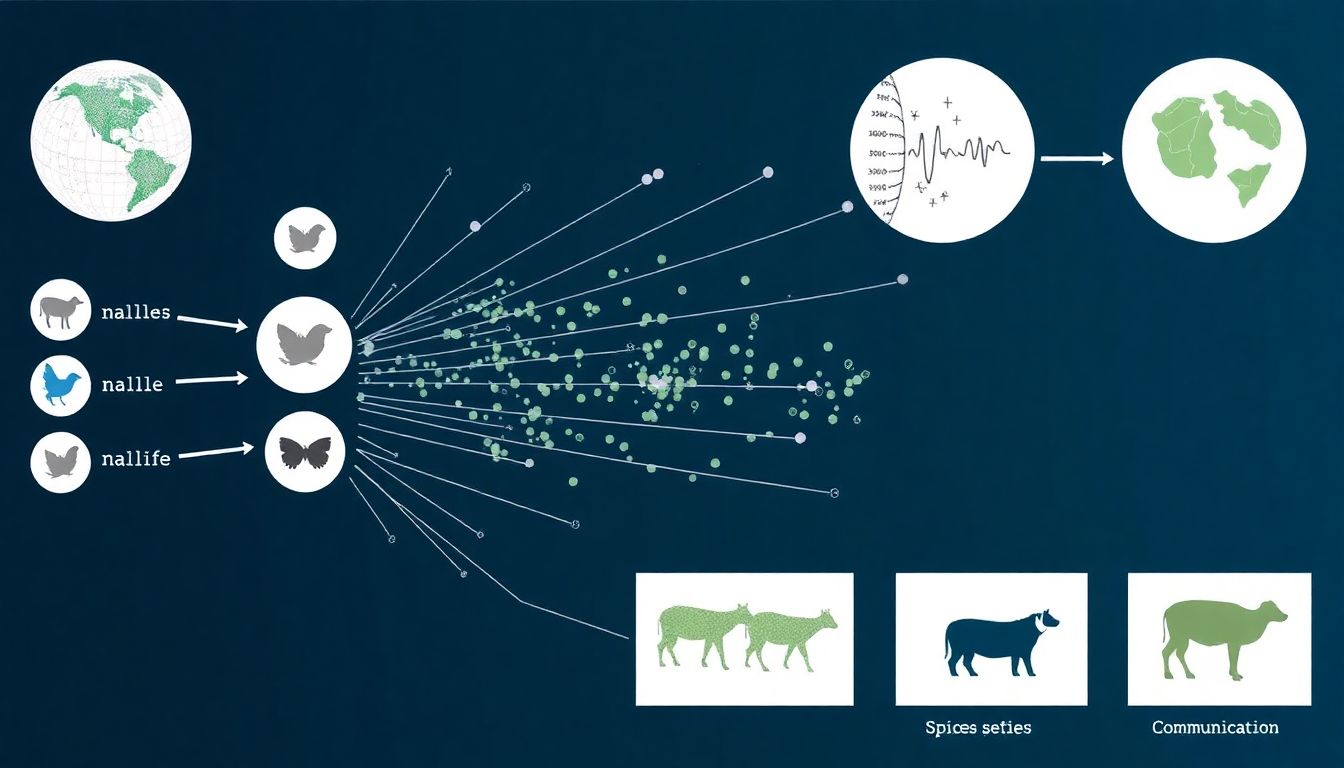
NatureLM, the AI language model developed by the Earth Species Project, exemplifies a remarkable advancement in the intersection of machine learning and ecology. This model is designed to process and interpret a vast array of animal vocalizations, a capability that is honed through a rigorous training process. The process involves exposing the model to an extensive dataset of labeled animal sounds, enabling it to recognize patterns and correlations that are indicative of specific species, ages, and even distress signals. By employing advanced algorithms and deep learning techniques, NatureLM can discern subtle nuances in animal communications, a feat that has traditionally been challenging for human researchers alone.
The training process of NatureLM is meticulous and multifaceted, involving several key steps:
- Data Collection: Gathering a diverse and comprehensive dataset of animal vocalizations from various environments and species.
- Data Annotation: Labeling the collected data with relevant information such as species, age, and context of the vocalization.
- Model Training: Using the annotated data to train the AI model through supervised learning methods.
- Validation and Testing: Evaluating the model’s performance on unseen data to ensure accuracy and reliability.
This structured approach ensures that NatureLM can generalize well across different scenarios and species, making it a robust tool for ecological research.
The potential applications of NatureLM are vast and promising. One of its most notable capabilities is identifying animal species based on their vocalizations. This can be invaluable for biodiversity studies and conservation efforts, as it allows researchers to monitor populations more efficiently. Additionally, the model’s ability to determine the age of an animal through its calls can provide insights into population dynamics and reproductive behaviors. Perhaps most innovatively, NatureLM shows potential in deciphering distress signals, which could revolutionize wildlife monitoring and protection strategies. Moreover, the model’s capacity to understand and potentially translate unknown animal languages opens up new avenues for interspecies communication research, offering a glimpse into the complex social structures and behaviors of various species. While these capabilities are exciting, it is essential to approach them with a critical eye, acknowledging the limitations and ethical considerations involved in deploying such advanced technologies in ecological contexts.
Challenges and Ethical Considerations
The endeavor to translate animal languages presents a myriad of challenges that are both technical and theoretical. Firstly, animal languages are not mere mirrors of human language, but rather, they are complex systems that have evolved to suit specific ecological needs. These languages can be multimodal, encompassing vocalizations, gestures, and even chemical signals, making them difficult to decipher using conventional linguistic frameworks. Furthermore, the lack of universal grammatical structures or common semantic fundamentals in animal languages poses a significant barrier. For instance, while dolphins use a sophisticated blend of clicks and whistles, their language is likely rooted in contextual and relational elements rather than fixed syntactic rules. Additionally, translating animal languages raises ethical questions, such as the potential for misinterpretation and the risk of imposing human-centric biases on animal communication systems.
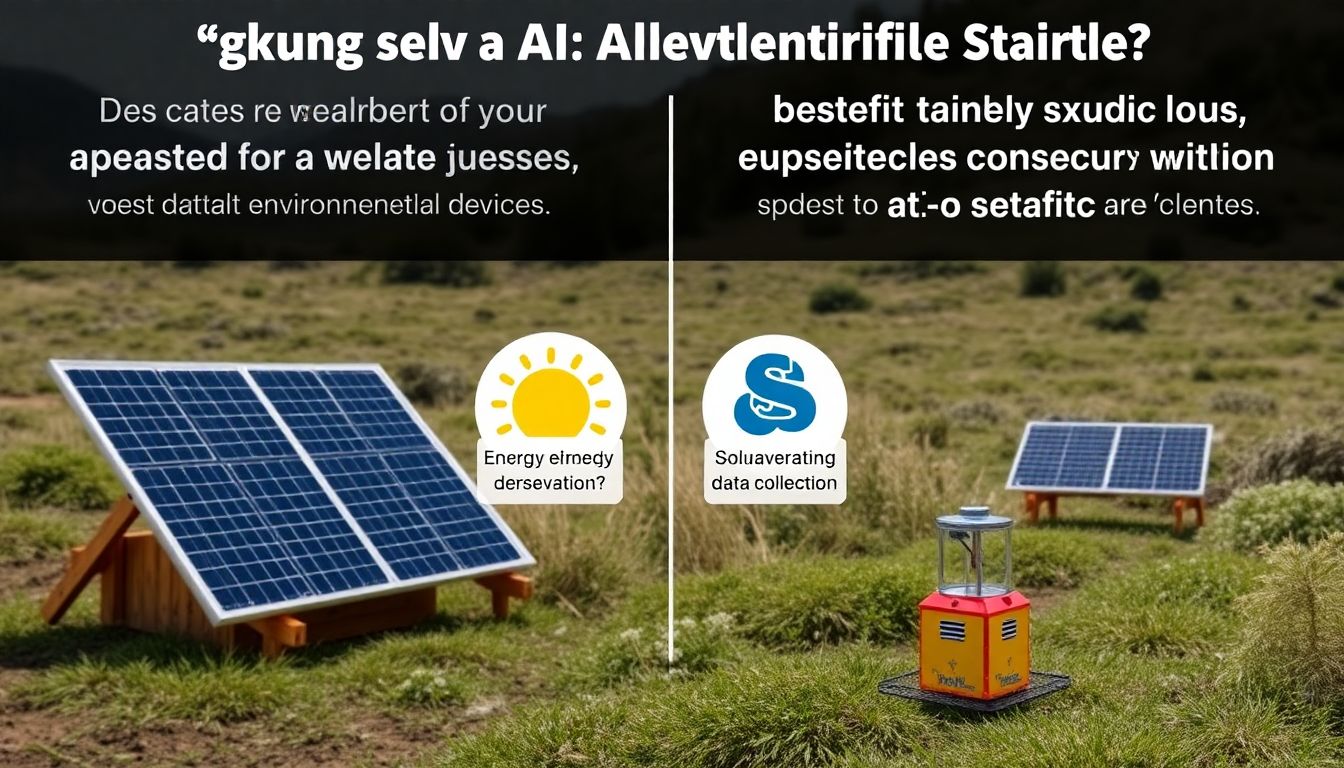
The escalating energy demand of AI also brings forth a suite of ethical implications that cannot be overlooked. As AI models grow more complex, so does their appetite for computational resources. Training a large AI model can emit as much carbon as five cars in their lifetimes, including the car’s fuel. This raises pressing concerns about AI’s carbon footprint and its contribution to climate change. Moreover, the inequitable distribution of energy resources means that the burden of AI’s energy demand may disproportionately fall on marginalized communities, exacerbating environmental injustices. Additionally, the opaque nature of AI’s energy consumption can lead to a lack of accountability, with the environmental costs often hidden or externalized. To navigate these challenges, it is crucial to advocate for transparency in AI’s energy usage, invest in renewable energy sources, and develop more energy-efficient AI algorithms.
Beyond these challenges, AI’s broader applications can significantly contribute to addressing climate change and biodiversity loss. Here are a few key areas:
-
Predictive Modeling:
AI can analyze vast amounts of environmental data to predict climate patterns, model ecosystem responses, and anticipate extreme weather events.
-
Wildlife Monitoring:
AI-powered tools can track animal populations, monitor behavioral changes, and detect poaching activities in real-time, as seen in Microsoft’s Project Premonition.
-
Precision Agriculture:
AI can optimize farming practices, reducing water usage, minimizing fertilizer runoff, and enhancing crop yields.
-
Conservation Planning:
AI can inform and optimize conservation strategies by identifying key habitats, mapping biodiversity hotspots, and simulating the impacts of different policies, such as Microsoft’s SPARROW project which complements efforts in conservation planning.
FAQ
What is the Earth Species Project?
How does NatureLM work?
What are the potential benefits of understanding animal languages?
What are the challenges in translating animal languages?
How is AI being used to address planetary concerns?
- Earth Species Project’s NatureLM for decoding animal communication.
- Microsoft’s SPARROW for measuring biodiversity in remote reaches.
- Other initiatives aimed at combatting climate change and promoting environmental conservation.
