
Welcome to The Progressive Subway, your hub for all things creative and musical! Today, we’re diving into a crucial topic that affects every artist and musician in our vibrant community. Grab your headphones and let’s tune in!
Navigating the Crossroads of Technology and Creativity
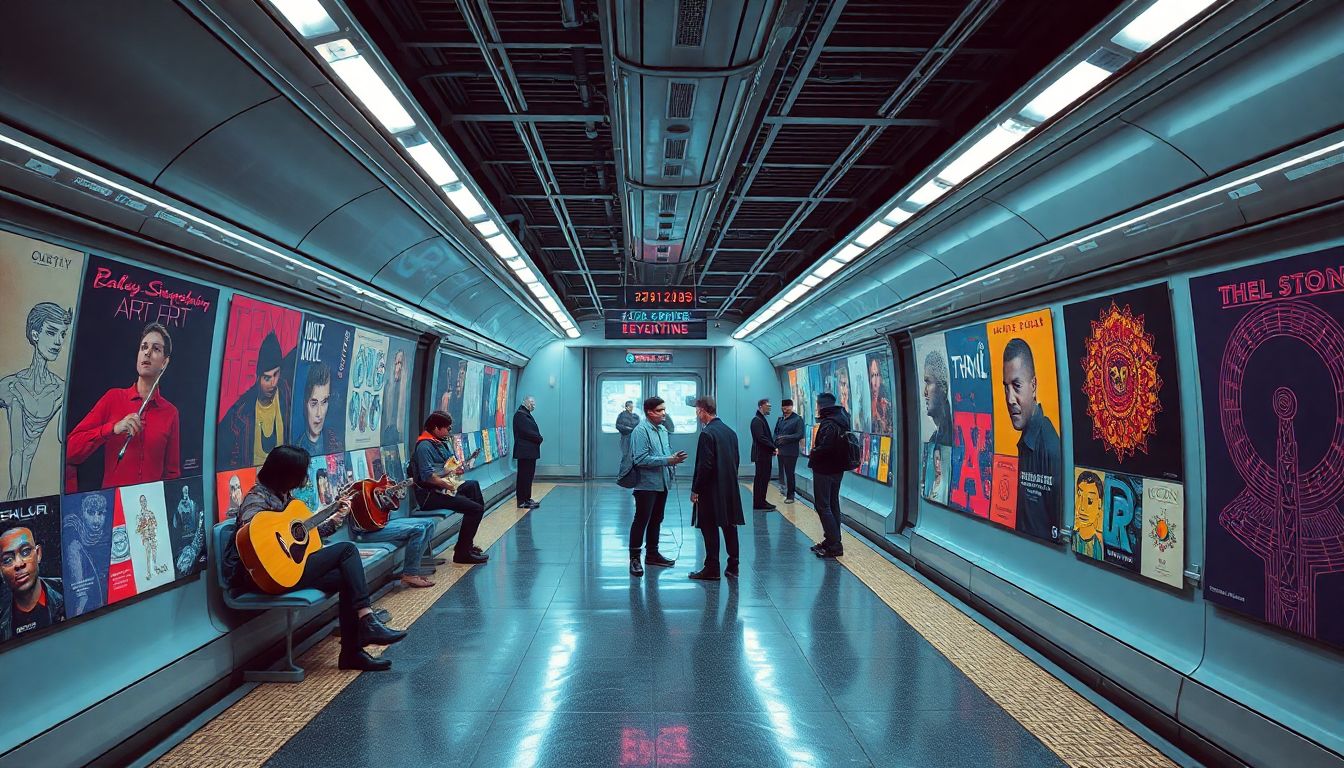
Imagine descending into a subway station of the future, where the stark white walls are adorned with a dizzying array of album covers, a vibrant mosaic of AI-generated imagery and handcrafted art. The digital pieces are eerily perfect, algorithmically designed to please the eye, while the traditional artworks bear the telltale signs of human touch, each brushstroke or pencil mark a testament to the artist’s unique vision. This clash of styles is not a battle but a dance, a convergence of worlds that creates a visual symphony, a harmony of contrasts that is as thought-provoking as it is aesthetically pleasing.
The station is alive with sound, a cacophony of melodies that echo through the tunnels as musicians interact with the art, drawing inspiration from the fusion of digital and traditional. Here, a jazz saxophonist improvises a melody inspired by the geometric patterns of an AI-generated cover; there, a folk singer strums her guitar, her lyrics a poetic interpretation of a nearby hand-painted landscape. The artists, too, are not idle, creating new works that incorporate elements from the album covers, further blurring the line between digital and traditional, between what is created and what is generated.
The Importance of Crediting Artists
In the digital age, crediting artists for their work has become increasingly significant, with the democratization of content and the rapid sharing of media across numerous platforms. Proper attribution serves multiple purposes: it acknowledges the creator’s effort and originality, facilitates further exploration of the artist’s work by interested parties, and fosters a culture of respect and professionalism within the artistic community. For independent artists, recognition can mean the difference between obscurity and career advancement. The ease of dissemination in the digital landscape can lead to a loss of control over one’s creations, and proper crediting helps maintain a vital connection between the artist and their audience. Moreover, crediting serves as a legal and ethical safeguard, ensuring that artists receive due compensation and recognition for their intellectual property.
However, the digital realm also presents unique challenges, particularly when bands or musicians fail to credit the artists behind their album artwork. Several issues arise from this oversight:
- Firstly, uncredited work can lead to a lack of exposure for the original artist, limiting their opportunities for collaboration, commissions, and growth within the industry. When artwork is shared without attribution, the visual artist’s name and portfolio remain hidden from view, effectively severing the link between the work and its creator.
- Secondly, improper crediting can have financial implications. While bands may benefit from eye-catching album art, the uncredited artist misses out on potential earnings, whether through direct sales, royalties, or networking opportunities stemming from the exposure.
- Lastly, the devaluation of artistic labor is a real concern. When artwork is used without proper attribution, it can perpetuate the notion that artistic contributions are disposable or secondary, undermining the artistic community as a whole.
The Rise of A.I Art and Its Implications
The burgeoning trend of AI-generated art and music is reshaping the creative landscape, with platforms and tools like DALL-E, Midjourney, and Amper Music democratizing the creation process. These AI models can generate impressive visuals or compelling melodies, often indistinguishable from human-made works, by learning from vast datasets of existing art and music. This phenomenon has sparked intriguing discussions and exhibitions, such as the portrait of Edmond de Belamy created by the French art collective Obvious, which sold for $432,500 at Christie’s in 2018, and the album “I Am AI” generated by Amper Music.
However, the rise of AI-generated art and music also presents a host of ethical dilemmas and challenges for real artists and musicians. One of the most pressing issues is the potential for AI to displace human creatives, devaluing their work and skills. Furthermore, the use of copyrighted material in training AI algorithms raises concerns about plagiarism and intellectual property rights. It is crucial to acknowledge and address these concerns as AI continues to evolve and intertwine with the art world. To ensure the sustenance and growth of authentic human creativity, it is essential to support real artists and musicians by investing in their work, respecting their intellectual property rights, and fostering an environment that values genuine artistic expression. Some ways to show support include:
- Purchasing or commissioning art and music directly from creators
- Attending concerts, exhibitions, and events that showcase human talent
- Advocating for fair compensation and better industry standards
Creative Alternatives to A.I Art
In the realm of album cover art, there’s a growing tendency to rely on AI-generated visuals for a quick and trendy outcome. However, there are numerous practical and creative alternatives that can result in unique and authentic designs. Bands like Tool have long championed the use of traditional mediums, with their album Lateralus featuring artwork by visionary artist Alex Grey, who used a combination of painting and drawing to create intricate, symbolic pieces. Similarly, Radiohead has consistently pushed the boundaries of album art, with In Rainbows employing a variety of mixed media created by longtime collaborator Stanley Donwood, who uses techniques like linocut, etching, and photography.
For bands looking to explore unconventional methods, there are myriad options that eschew AI in favor of tactile, handcrafted approaches. For instance, The White Stripes utilized a quilt for the cover of their self-titled debut album, creating a homespun and distinctive look that stands out in the digital age. Other innovative methods might include:
- Collage: Bands like Neutral Milk Hotel have used collage to create surreal and evocative album covers, as seen on their seminal work In the Aeroplane Over the Sea.
- Photography: Iconic covers like Nirvana’s Nevermind demonstrate the power of a single, striking photograph.
- Screen printing: This technique offers a DIY aesthetic and has been used by bands like Black Flag to create bold, high-contrast designs.
- Embroidery and textiles: Incorporating fabrics and stitching can lend a warm, organic feel to album art, as seen on some editions of Sufjan Stevens’ The Age of Adz.
FAQ
Why is it important to credit artists for their work?
- It acknowledges the time, effort, and skill that went into creating the artwork.
- It helps artists build their portfolio and gain recognition.
- It fosters a supportive community where artists can thrive and inspire each other.
What are the potential downsides of using A.I-generated art?
- It can devalue the work of real artists by flooding the market with cheap, easily generated content.
- It can lead to a homogenization of art styles, as A.I. often relies on existing trends and data.
- It can contribute to environmental damage due to the high energy consumption of training A.I. models.
What are some creative alternatives to using A.I-generated art?
- Using public domain images or photographs.
- Creating DIY art using simple tools and software.
- Collaborating with local artists or fellow musicians to create unique artwork.
How can small artists and musicians support each other?
- By crediting and promoting each other’s work.
- By collaborating on projects and sharing resources.
- By advocating for fair compensation and recognition within the industry.
What role do reviewers play in fostering a supportive artistic community?
- By acknowledging and crediting the artists behind the album art.
- By highlighting the importance of real art and creativity.
- By encouraging musicians to explore creative alternatives to A.I-generated art.
