
Welcome to this detailed and engaging exploration of Russia’s strategic move towards collaborating with China in the realm of artificial intelligence (AI) technology. This article delves into the directives issued by Russian President Vladimir Putin, the role of Sberbank, and the broader geopolitical implications of this alliance. Join us as we unravel the intricacies of this developing story, making it both informative and captivating.
A Strategic Alliance in the Face of Western Sanctions
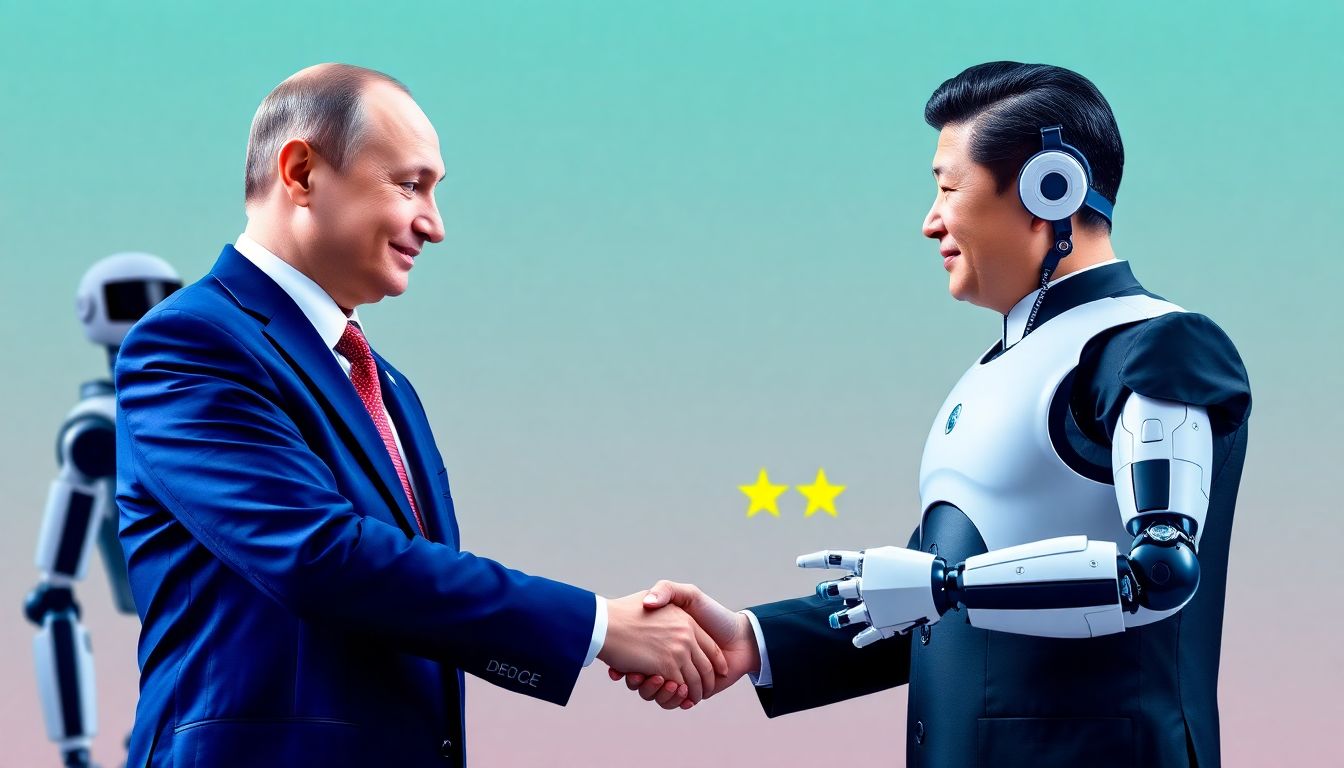
The image presents a politically charged scene: Vladimir Putin and Xi Jinping, two of the most influential figures in global politics, standing firmly in the foreground, clasping hands in a symbol of unity and cooperation. Their surroundings are not the typical gilded halls of political summits, but rather a sleek, futuristic laboratory, teeming with AI-powered robots in various stages of assembly and operation. This setting is not incidental; it is a stark symbol of the shared ambition of Russia and China to advance their technological capabilities, with a particular focus on artificial intelligence.
The robots in the background are more than just props, they are statements. Some are industrial, hinting at the countries’ desire to revolutionize manufacturing and infrastructure. Others are humanoid, suggesting a keen interest in pushing the boundaries of human-AI interaction. The message is clear: Russia and China are not just collaborating on AI for economic gain, but also for technological dominance. Yet, the image also raises questions about the ethical implications of such a partnership, the potential for AI-driven surveillance and control, and the geopolitical tensions that could arise from this powerful alliance.

Putin’s Directive and Sberbank’s Role
Vladimir Putin has issued specific instructions to the Russian government and Sberbank to prioritize strategic partnerships with China in the realm of Artificial Intelligence (AI). These instructions include several key directives: firstly, to facilitate the transfer of technology between Russian and Chinese AI research institutions and corporations; secondly, to establish joint AI research laboratories and innovation centers; and thirdly, to foster cooperation between Sberbank and major Chinese tech giants such as Huawei, Tencent, and Alibaba. Putin’s orders also emphasize the need to develop joint AI standards and regulatory frameworks, which could potentially create a powerful AI alliance between the two nations. This strategic alignment is aimed at bolstering Russia’s AI capabilities and reducing its dependence on Western technology.
The significance of Sberbank leading Russia’s AI development efforts is multifaceted. Sberbank, originally a financial institution, has rapidly evolved into a major player in Russia’s digital economy. It has established a dedicated AI division, Sberbank AI, which focuses on developing advanced AI solutions for various sectors, including finance, healthcare, and public services. Sberbank’s pivotal role in Russia’s AI strategy offers several advantages:
- It ensures that AI development is aligned with the country’s economic and industrial priorities.
- It facilitates the integration of AI into Russia’s financial infrastructure, promoting financial innovation and security.
- It enables the consolidation of resources and expertise, avoiding fragmentation of AI efforts across different government agencies and private entities.
However, Sberbank’s leadership in AI also presents certain challenges, such as the potential for over-centralization and the risk of stifling competition from other AI startups and research institutions.
Despite the ambitious goals and the strategic importance of Russia-China AI cooperation, the initiative faces significant challenges due to international sanctions. Sanctions imposed by the United States and its allies have limited Russia’s access to advanced technologies, global financial markets, and international research collaborations. The key challenges include:
-
Technology constraints:
Sanctions restrict Russia’s ability to acquire cutting-edge hardware and software, which are crucial for AI development.
-
Limited foreign investment:
Sanctions deter foreign investors from participating in Russia’s AI initiatives, making it difficult to secure funding for large-scale projects.
-
Brain drain:
Sanctions and the associated economic instability contribute to the emigration of highly skilled professionals, leading to a potential loss of expertise for Russia’s AI sector.
-
Geopolitical tensions:
The broader geopolitical context, including tensions with the West and the complex dynamics of the Russia-China relationship, could impact the stability and effectiveness of AI partnerships.
To mitigate these challenges, Russia is actively seeking to strengthen its domestic AI ecosystem, foster homegrown talent, and diversify its international partnerships beyond China.
The BRICS Alliance and Global Implications
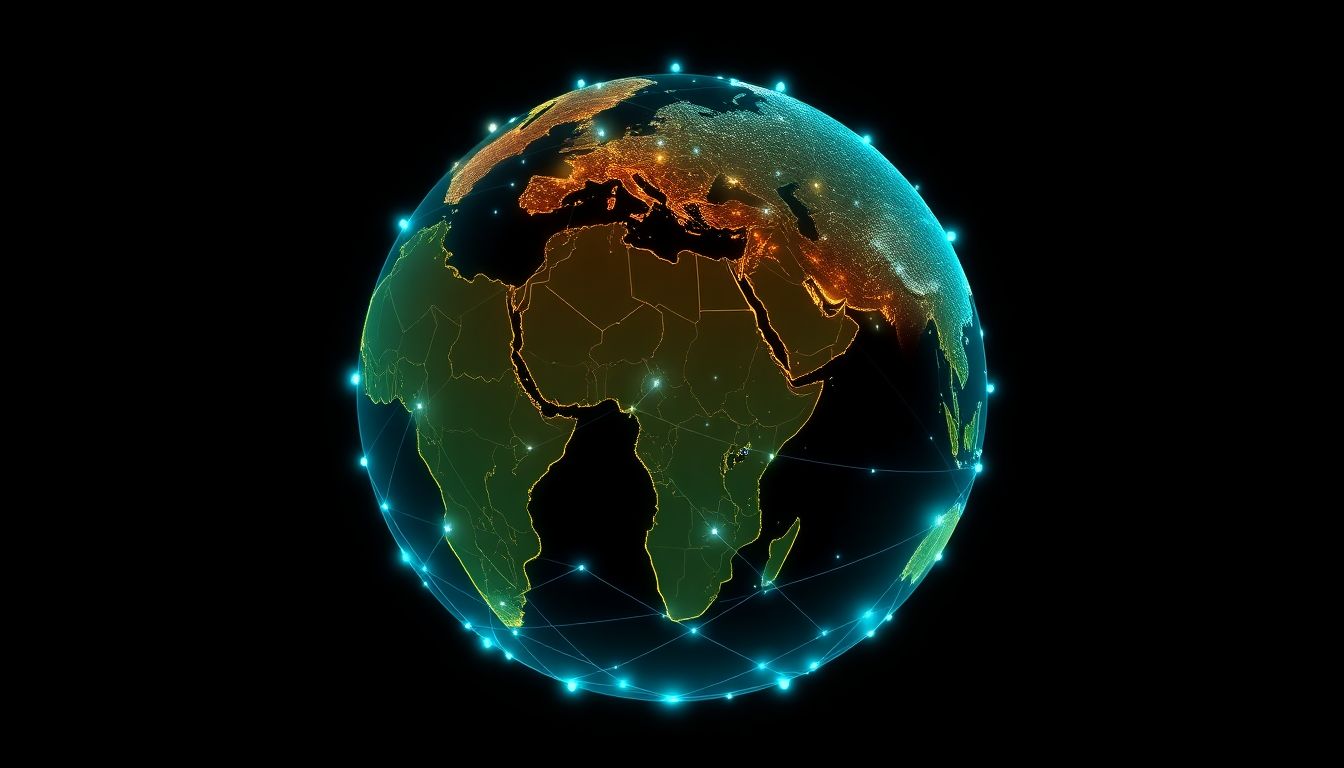
Russian President Vladimir Putin’s vision for an AI Alliance Network with BRICS countries—Brazil, Russia, India, China, and South Africa—marks a significant geopolitical maneuver in the global AI landscape. This alliance, if realized, would aggregate over 40% of the world’s population and nearly a quarter of the global GDP, forming a substantial counterweight to Western-led initiatives such as the Global Partnership on AI (GPAI). The strategic importance of this alliance lies in its potential to pool together vast amounts of data, talent, and resources, enabling accelerated advancements in AI.
The BRICS AI Alliance Network could have a profound global impact. On the positive side,
- it may foster innovation and economic growth within the BRICS nations
- it could facilitate the development of AI solutions tailored to the specific needs and challenges of these countries
- and it could promote a more diverse and inclusive AI ecosystem, countering the West’s dominance in AI governance and development
. However, there are also potential negatives. The alliance could
- exacerbate the fragmentation of the global AI landscape
- intensify geopolitical tensions
- and pose challenges to international cooperation on AI ethics and governance
.
To fully understand the potential of this alliance, it’s crucial to consider the broader context of AI competition. The US and China are currently the dominant players in AI, with the US leading in hardware and software development, and China excelling in data collection and AI application. The BRICS AI Alliance Network could disrupt this dynamic,
- providing an alternative path for AI development
- and challenging the hegemony of the US and China
. However, the success of this alliance will depend on the member countries’ ability to coordinate their efforts, overcome technological and infrastructure gaps, and address potential political and strategic divergences.
Deepening Ties Between Russia and China
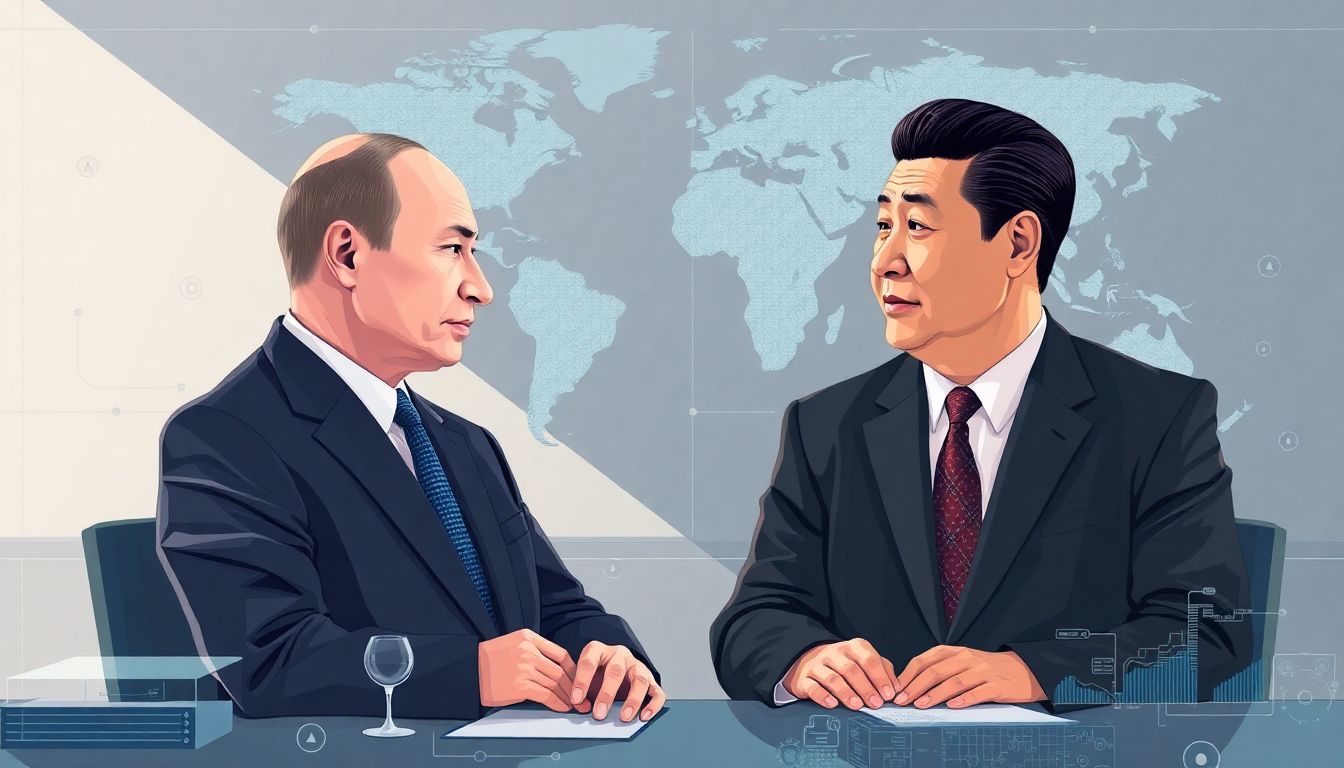
The relationship between Russia and China has been steadily strengthening, with both countries finding common ground in their geopolitical interests and mutual desire to counterbalance Western influence. This bond has been highlighted by the exchange of New Year greetings between President Vladimir Putin and President Xi Jinping, a tradition that has become a symbol of their close diplomatic ties. In their messages, both leaders emphasized the importance of their strategic partnership, with Putin praising the “fruitful cooperation” between the two nations and Xi stressing the significance of their “comprehensive strategic partnership of coordination for a new era.”
However, the deepening relationship between Russia and China is not without its critics. Some analysts argue that this alliance is primarily driven by a shared desire to challenge the existing international order, rather than by genuine economic or cultural synergies. Furthermore, there are concerns about the lack of transparency in their military cooperation, as well as the potential for their partnership to exacerbate global tensions. Despite these reservations, the two countries seem resolved to continue on their path of close collaboration, as evidenced by their upcoming high-level meetings.
In this context, the upcoming visit of Xi Jinping to Russia holds significant geopolitical implications. This will be Xi’s first trip abroad since the start of his third term, underscoring the importance that China places on its relationship with Russia. The visit is expected to include a series of bilateral events, such as:
- High-level political and economic dialogues, aimed at deepening integration and cooperation
- The signing of new agreements in areas such as energy, trade, and technology
- Cultural exchanges and people-to-people interactions, designed to foster mutual understanding and friendship
This visit will likely serve to further solidify the Sino-Russian alliance, with potential implications for the global power dynamics.
FAQ
Why is Russia turning to China for AI technology partnerships?
What role does Sberbank play in Russia’s AI development?
What is the significance of the BRICS AI Alliance Network?
How have Russia and China deepened their ties recently?
- Exchange of New Year greetings between Putin and Xi Jinping
- Planned visit of Xi Jinping to Russia
- Development of bilateral events and strategic coordination
