
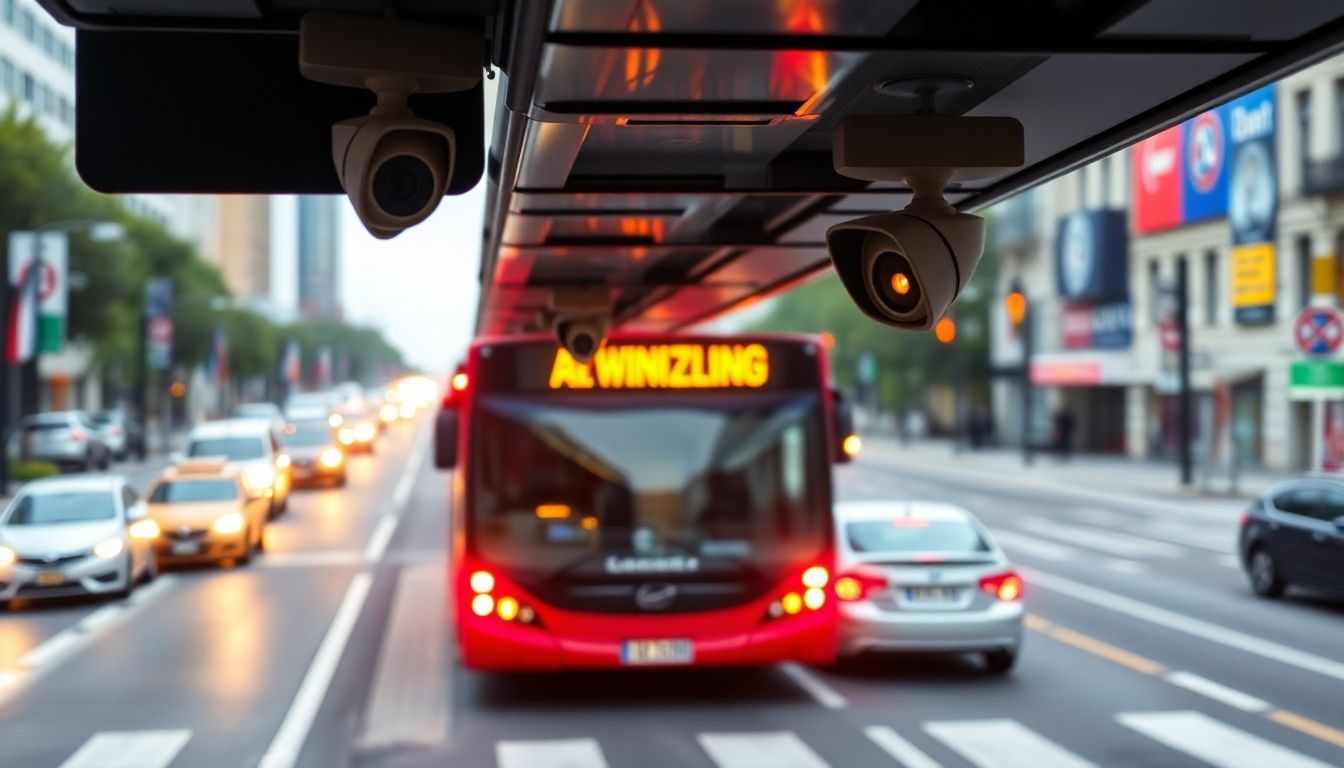
Welcome to our fascinating exploration of how AI-powered cameras are revolutionizing transit systems! Imagine a world where bus lanes are always clear, and public transportation is smooth and efficient. Sounds like a dream, right? Well, it’s becoming a reality thanks to innovative startups like Hayden AI. Join us as we delve into the world of AI-enhanced cameras and their impact on our daily commutes.
Discover how Hayden AI is transforming public transportation with cutting-edge technology.
Imagine a bustling city street, where the cacophony of honking cars and chattering pedestrians creates a symphony characteristic of urban life. In this vibrant tableau, technology is subtly interwoven into the fabric of daily activities, aiming to optimize and streamline. AI-enhanced cameras, discreetly mounted on buses, continuously capture high-resolution images of the surrounding environment. These are not mere passive observers; they are integral components of an advanced traffic management system. The cameras, equipped with state-of-the-art machine learning algorithms, are programmed to identify and document instances of drivers blocking designated bus lanes. This real-time monitoring serves a dual purpose: it helps maintain the smooth flow of public transportation and acts as a deterrent against traffic violations.
However, the implementation of such a system is not without its controversies. While proponents argue that the cameras enhance efficiency and discourage illegal behavior, critics have raised concerns about privacy invasion and potential misuse of data. The constant surveillance raises questions about who has access to the footage and how it is being utilized. Additionally, there are worries about the potential for false positives, where innocent drivers might be penalized due to errors in the AI’s judgment. Despite these reservations, the integration of AI in urban planning showcases the ongoing tension between technological advancement and societal concerns, highlighting the need for balanced regulations and transparent public discourse.
The Rise of AI-Powered Cameras in Transit Systems
The growing trend of transit agencies employing AI-enhanced cameras to monitor bus lanes is transforming urban traffic management. These sophisticated systems are designed to maintain the smooth flow of public transportation by detecting and responding to vehicles illegally parked in dedicated bus lanes. The technology behind these cameras is a blend of computer vision and machine learning algorithms, enabling real-time identification of violations.
The AI-enhanced cameras leverage advanced image processing techniques to analyze live video feeds. Here’s how they work:
- The cameras continuously capture footage of the bus lanes.
- The AI algorithms process these images to identify vehicles that are not buses and determine if they are parked illegally.
- Once a violation is detected, the system can automatically issue fines or alert enforcement authorities.
This proactive approach helps in reducing congestion and ensuring that bus lanes remain clear for public transport.
However, the use of AI-enhanced cameras is not without its controversies. On the positive side, these systems can significantly improve traffic flow and enhance the efficiency of public transportation. They also reduce the need for manual enforcement, allowing resources to be allocated more effectively. Conversely, there are privacy concerns associated with constant surveillance. Additionally, the reliability of AI in accurately identifying violations is still a topic of debate, with potential for false positives and unfair penalties. Transit agencies must therefore strike a balance between leveraging technology for public good and addressing the ethical implications of AI-driven enforcement.

Hayden AI: The Company Behind the Revolution
Hayden AI, a burgeoning start-up, has swiftly captured the attention and partnerships of transit agencies across the United States. Their mission is clear and compelling: to revolutionize traffic management and enhance urban mobility through the power of artificial intelligence. By leveraging cutting-edge AI algorithms and real-time data analytics, Hayden AI aims to create smoother, safer, and more efficient transit experiences, ultimately fostering more livable and sustainable cities.
The technology behind Hayden AI is both innovative and robust. Their AI platform, aptly named Symphony, integrates with existing traffic infrastructure to optimize signal timing, reduce congestion, and prioritize public transit vehicles. Using a network of sensors, cameras, and other data sources, Symphony ingests vast amounts of real-time traffic data and adjusts signal patterns on-the-fly. This dynamic adaptation can lead to reduced emissions, shorter commute times, and improved overall traffic flow. Notably, Hayden AI’s technology can be seamlessly integrated with existing infrastructure, avoiding the need for costly hardware overhauls. However, the system’s reliance on data collection may raise privacy concerns, and its effectiveness can be hindered by data inaccuracies or incomplete sensor coverage.
The impact of Hayden AI on cities like New York and Oakland has been significant and multifaceted. In New York, the start-up’s collaboration with the Metropolitan Transportation Authority (MTA) has resulted in improved bus speeds and on-time performance. By implementing Hayden AI’s transit signal priority (TSP) system, buses have experienced reduced delays, leading to more reliable service and enhanced passenger satisfaction. Meanwhile, in Oakland, Hayden AI’s adaptive traffic signal control has helped alleviate congestion hotspots, resulting in smoother traffic flow and reduced travel times. However, it’s crucial to acknowledge potential drawbacks. The success of Hayden AI’s implementations relies heavily on the quality and availability of data, as well as the willingness of cities to embrace and invest in new technologies. Furthermore, while the benefits may be evident in specific corridors or intersections, the overall impact on broader traffic networks may be less immediate or uniform.
Changing Driver Behavior: The Ultimate Goal
The primary goal of AI-powered cameras in public transportation, particularly in buses, is to modify driver behavior and enhance bus service reliability. These cameras, equipped with advanced computer vision and machine learning algorithms, constantly monitor drivers’ performance and provide real-time feedback. The objective is to encourage safer driving habits, adherence to schedules, and improved overall service. By tracking metrics such as sudden acceleration, harsh braking, and speed limit compliance, these cameras aim to create a more efficient and safer bus service. Initial studies have shown promising results, with some cities reporting up to a 30% reduction in traffic violations and a 20% improvement in on-time performance. Furthermore, the data collected can be invaluable for optimizing routes and predicting maintenance needs, thus preventing potential delays and breakdowns.
Despite the potential benefits, the implementation of AI-powered cameras has faced several challenges. One of the most significant concerns is the privacy implications. Continuously recording and analyzing drivers’ behavior raises ethical questions about surveillance and data security. Additionally, there have been reports of technological hiccups, such as false positives and negatives in identifying poor driving habits. Moreover, the cost of implementation and maintenance can be high, which might deter some transportation agencies from adopting this technology. There is also the issue of driver acceptance; some drivers view these cameras as a sign of mistrust, leading to morale issues and resistance to adoption.
To ensure the successful integration of AI-powered cameras, it is crucial to address these challenges head-on. This could involve:
- Strict data privacy protocols to ensure the security and confidentiality of the information collected.
- Regular maintenance and updates to minimize technological glitches.
- Providing clear communication to drivers about the benefits and goals of the technology.
- Offering incentives to encourage acceptance and positive engagement with the system.
- Gradual rollout to allow time for adjustment and feedback.
Ultimately, while AI-powered cameras have the potential to revolutionize bus service, it is essential to approach their implementation thoughtfully and with careful consideration of the human factors involved.
FAQ
What is Hayden AI and how does it work?
What are the benefits of using AI-powered cameras in transit systems?
- Improved bus service reliability.
- Reduced traffic congestion.
- Changed driver behavior to discourage illegal parking.
How has the implementation of these cameras impacted bus services in major cities?
What are some of the challenges faced during the implementation of AI-powered cameras in transit systems?
- Programming errors leading to erroneous tickets.
- Issues during the warning period for bus lane enforcement zones.
- Concerns about the reliability and accountability of AI technology in public transportation.
