
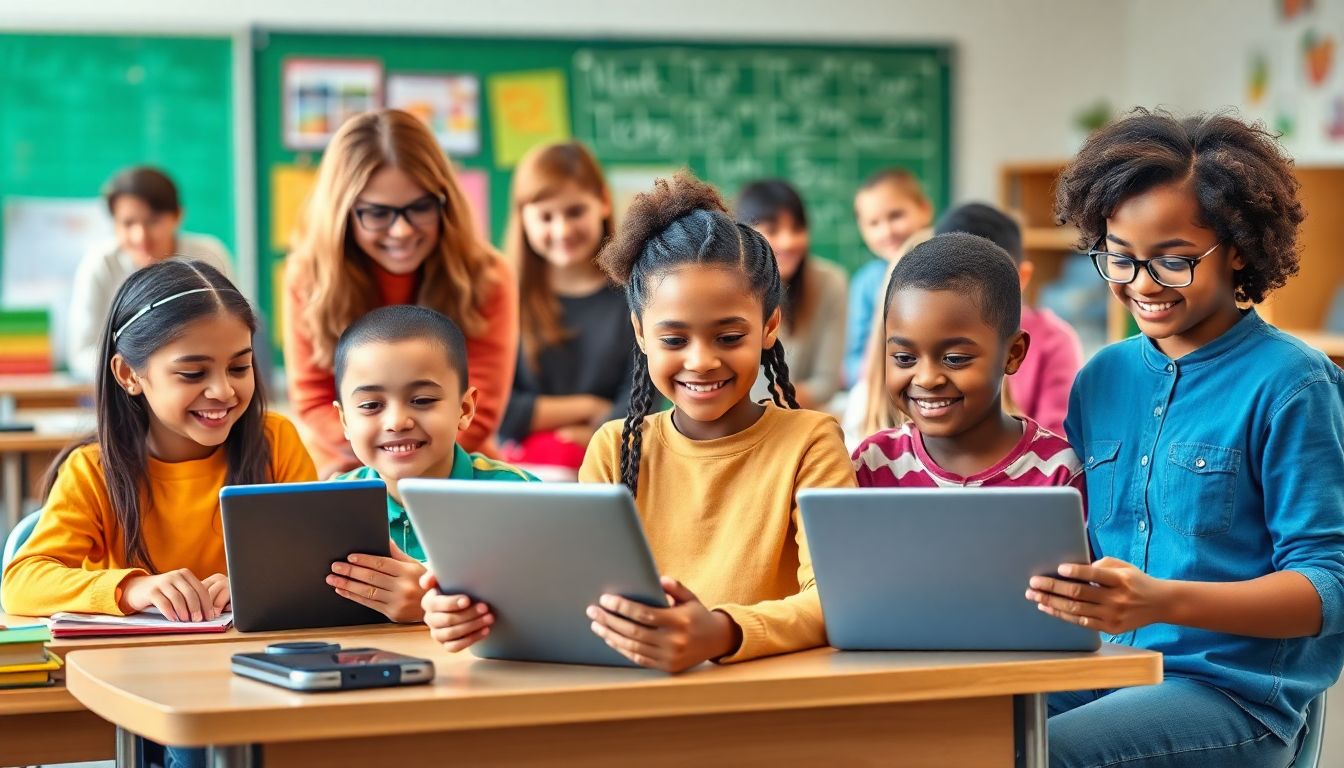
Welcome to an inspiring journey into the world of AI technology, where we explore how innovative tools are transforming education for students with disabilities. This article delves into the remarkable stories of students whose lives have been positively impacted by AI, the cutting-edge technologies making this possible, and the broader implications for education. Join us as we uncover the potential and challenges of integrating AI in classrooms to create a more inclusive learning environment.
Exploring the Impact of AI on Inclusive Education
Imagine walking into a bustling classroom, a symphony of laughter and learning filling the air. This is no ordinary classroom; it’s a vibrant tapestry of diversity and inclusion, where students of varied abilities are engaged in learning activities, their faces lit up with curiosity and delight. The hum of activity is underscored by the subtle buzz of technology—tablets, laptops, and an array of assistive devices, all powered by AI, working in harmony to cater to the unique needs of each student.
Look closer, and you’ll see a student with visual impairments, using a tablet with a built-in AI screen reader, navigating learning materials with ease. Nearby, a student with hearing impairments is engrossed in a video lesson, the AI-powered device providing real-time captions. In another corner, a student with autism is working on a laptop, the AI software predicting and assisting with their typing, helping them express their thoughts more fluently.
The teachers are not mere spectators but active collaborators, their faces adorned with smiles of encouragement. They move around the classroom, interacting with the students, providing guidance where needed, and ensuring that everyone is included and supported. The AI tools are not replacements for human interaction but enhancements, facilitating a more personalized and inclusive learning environment. The atmosphere is one of acceptance, understanding, and growth, a testament to the power of technology and community in education.

Makenzie’s Journey: Overcoming Dyslexia with AI
Makenzie Gilkison’s educational journey has been marked by a significant challenge: dyslexia. This learning disability, characterized by difficulties with accurate and fluent word recognition and poor spelling and decoding abilities, has historically posed substantial obstacles to her academic progress. For years, Makenzie struggled with reading comprehension, often lagging behind her peers despite her best efforts. Her teachers and parents noticed her difficulties, but traditional teaching methods and extra tutoring sessions yielded only modest improvements. The turnaround in her educational experience began when she was introduced to AI-powered assistive technologies, which have since transformed her learning process.
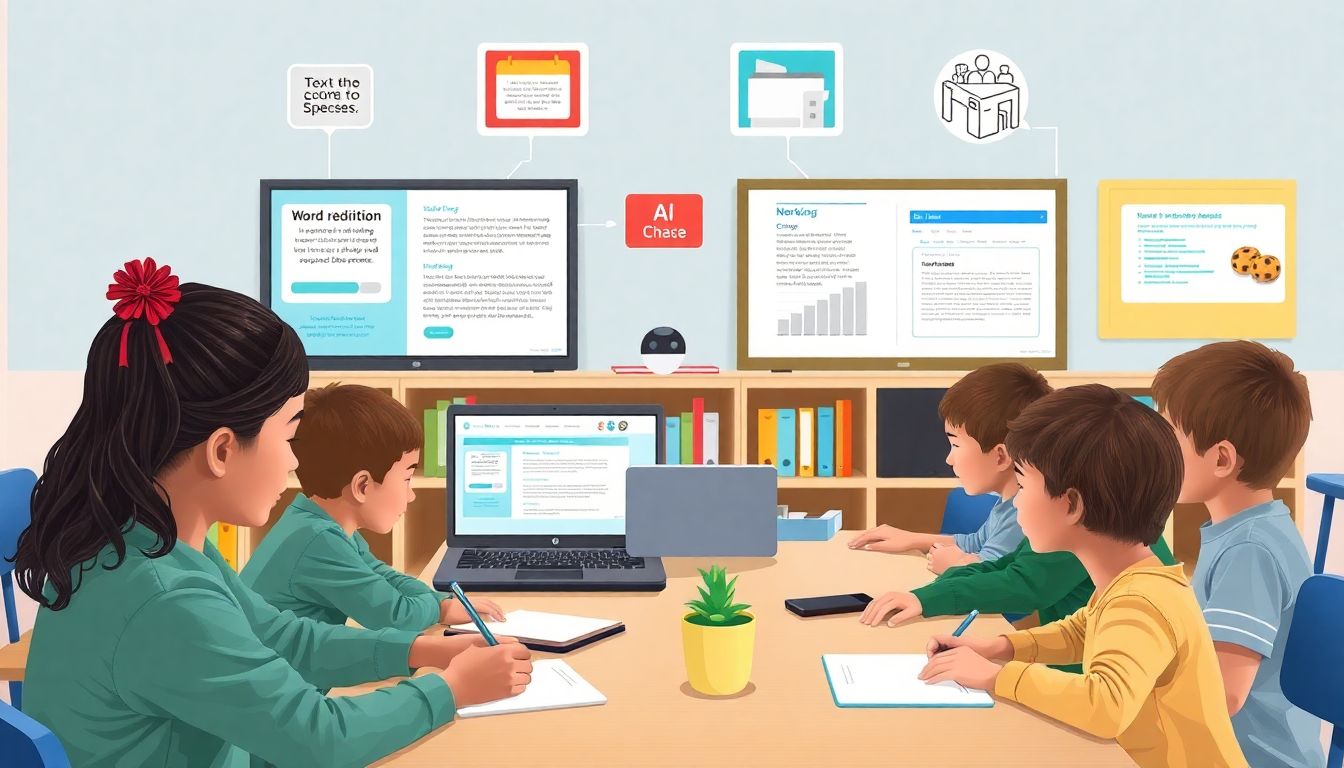
Several AI-powered tools have been instrumental in Makenzie’s academic growth. Among them, Read&Write by Texthelp stands out. This software offers a range of features designed to support individuals with dyslexia. Some of its key functionalities include:
-
Text-to-Speech:
Converts written text into spoken words, allowing Makenzie to listen to her reading materials and improve her comprehension.
-
Screen Masking:
Helps her focus on specific parts of the text by reducing visual stress and distractions.
-
Predictive Text:
Assists in writing by suggesting words as she types, enhancing her writing speed and accuracy.
Additionally, Makenzie uses Grammarly, an AI-driven writing assistant that checks her work for grammar, punctuation, and style errors, providing real-time feedback that has significantly improved her writing skills.
The impact of these technologies on Makenzie’s academic achievements has been profound. Prior to their adoption, Makenzie’s reading and writing skills were considerably below her grade level, causing her frustration and affecting her self-esteem. However, with the consistent use of AI-powered tools, she has shown remarkable progress. Her reading comprehension has improved substantially, and her writing has become more coherent and error-free. Moreover, these tools have bolstered her confidence, encouraging her to participate more actively in class discussions and take on more challenging academic tasks. Makenzie’s transformation underscores the potential of AI to level the playing field for students with learning disabilities, offering them the support they need to succeed in their educational pursuits.
The Promise of AI in Special Education
The potential of Artificial Intelligence (AI) in assisting students with various disabilities is vast and multifaceted, offering personalized learning experiences that can adapt to individual needs. AI can provide support for students with learning difficulties such as dyslexia, dyscalculia, and ADHD, as well as those with physical, sensory, or cognitive impairments. AI-driven tools can help these students by offering text-to-speech capabilities, predictive text, smart content personalization, and interactive learning experiences that cater to their unique requirements.
Several types of AI tools are being integrated into modern classrooms to support students with disabilities. These include:
- Intelligent Tutoring Systems (ITS): These use AI algorithms to provide immediate and personalized instruction or feedback to learners, usually without intervention from a human teacher.
- Natural Language Processing (NLP): NLP tools can help students with writing difficulties by providing text suggestions, grammar checks, and contextual spell checking.
- Speech Recognition and Text-to-Speech Systems: These tools allow students with mobility impairments or learning disabilities like dyslexia to interact with content more effectively.
- AI-Driven Educational Games and Simulations: These can make learning more engaging and accessible for students with cognitive impairments or those on the autism spectrum.
Educators and experts have varying perspectives on the benefits and challenges of AI in classrooms. On one hand, AI can provide unparalleled levels of personalization, ensuring that each student receives instruction tailored to their specific needs and pace of learning. AI can also reduce the workload on teachers, allowing them to focus more on individual student interactions and less on grading and administrative tasks. However, there are notable challenges. Data privacy is a significant concern, as AI tools often collect and store large amounts of student data. Additionally, there is the risk of over-reliance on technology, which could hinder the development of critical thinking and social skills. Furthermore, the digital divide may exacerbate educational inequalities, as not all students have equal access to advanced AI tools and technologies. Balancing these benefits and drawbacks will be crucial as AI becomes more integrated into educational settings.

Balancing Benefits and Challenges
The integration of Artificial Intelligence (AI) in education presents a complex landscape of ethical considerations and practical challenges. One of the primary ethical concerns is the potential for over-reliance on AI, which could lead to a diminished learning experience if students become too dependent on AI tools for answers rather than engaging in critical thinking and problem-solving. Additionally, there are privacy concerns surrounding the collection and use of student data, as well as bias and fairness issues that could inadvertently perpetuate or even exacerbate existing inequalities if the AI algorithms are not designed with diversity and inclusion in mind. Practical challenges include the digital divide, where not all students have equal access to the technology required to benefit from AI-driven educational tools, and the need for teacher training to effectively integrate AI into curriculum and classroom management.
Balancing the use of AI to assist students while ensuring they are still learning is a delicate task. On one hand, AI can provide personalized learning experiences, adapt to individual student needs, and offer immediate feedback—all of which can enhance learning outcomes. On the other hand, over-reliance on AI could hinder the development of essential skills such as critical thinking, creativity, and resilience. To strike this balance, schools are implementing various strategies. For instance, some schools use AI for grading and administrative tasks, freeing up teachers’ time to focus on instruction and student interaction. Other schools employ AI as a supplemental tool, providing additional resources and support without replacing traditional teaching methods. Examples include:
- The Carnegie Learning platform, which uses AI to provide real-time feedback and adaptive learning pathways but keeps teachers at the core of instruction.
- The Duolingo language learning app, which uses AI for personalized learning but encourages users to practice and apply skills independently.
Looking ahead, the future of AI in education holds both promise and uncertainty. As AI technologies continue to evolve, there is potential for even more advanced personalization and accessible learning opportunities. However, realizing this potential will require addressing the aforementioned ethical and practical challenges. Schools and educational institutions will need to invest in robust infrastructure, ensure equitable access, and foster a culture of ethical AI use. Moreover, ongoing research and dialogue among educators, policymakers, and technology developers will be crucial in shaping a future where AI serves as a powerful tool to enhance education without compromising its core values and objectives.
FAQ
How does AI help students with dyslexia?
What are some common AI tools used in special education?
- Text-to-speech software
- Word prediction programs
- AI-powered chatbots
- Interactive learning software
- Speech recognition tools
.
