
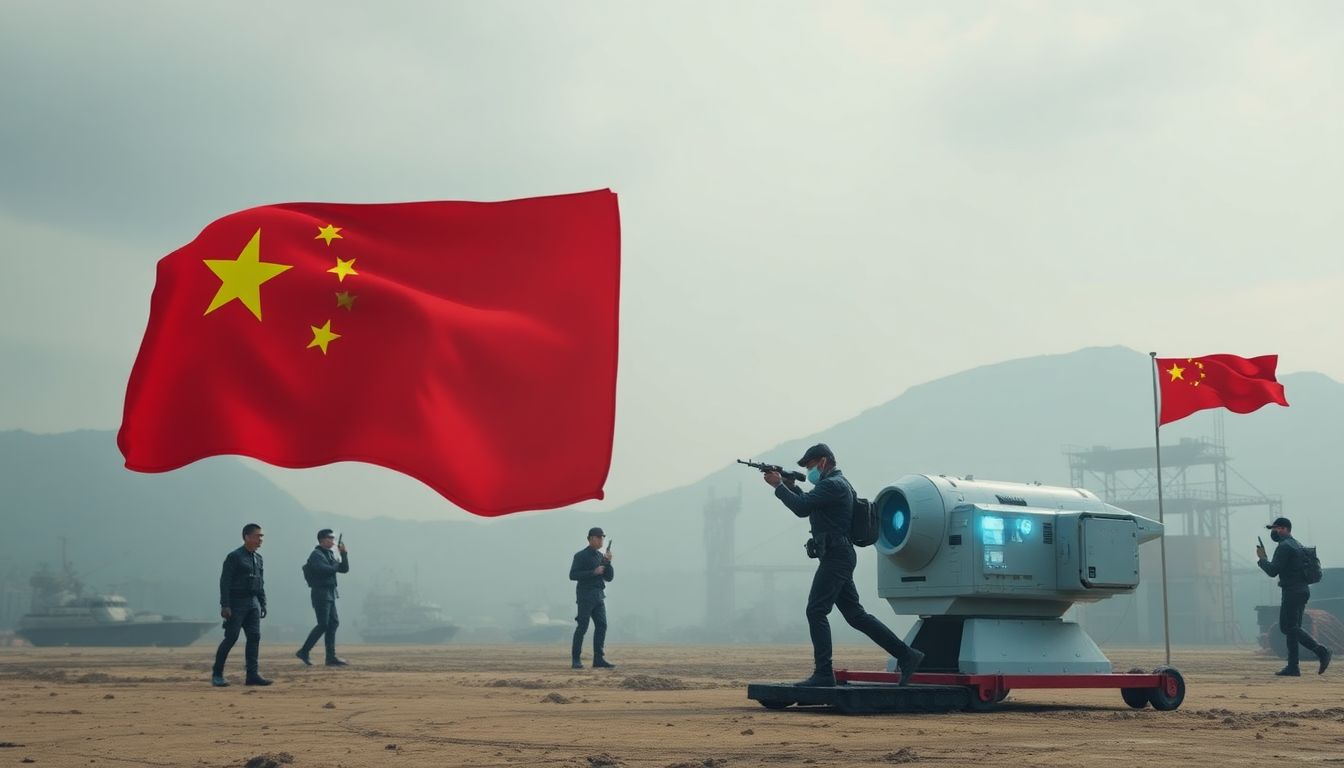
Delve into the fascinating and complex world of China’s ambitious pursuit of military artificial intelligence (AI). This article explores the strategic priorities, challenges, and political dynamics that shape China’s quest to harness AI for military superiority. Join us as we navigate the technical, organizational, and political hurdles that China must overcome to realize its AI aspirations.
Exploring the Challenges and Complexities of China’s Military AI Ambitions
China’s pursuit of military AI supremacy faces a myriad of technical challenges, despite the country’s rapid advancements in AI-related fields. One of the primary obstacles is the development of indigenous high-performance hardware, such as advanced semiconductors and processing units. While China has made strides in this area, it still lags behind industry leaders like the United States, South Korea, and Taiwan. Additionally, the reliability and security of AI systems in combat situations present significant hurdles. Ensuring that these systems can operate effectively under adverse conditions, such as electromagnetic interference or cyberattacks, is a critical technical challenge that China must overcome.
Organizationally, China’s military AI ambitions are hindered by several factors, including the integration of AI into existing military structures and structuring effective collaboration between military and civilian sectors. The People’s Liberation Army (PLA) has traditionally been hierarchical and compartmentalized, which can impede the fluid information exchange and cross-disciplinary collaboration essential for AI development. Moreover, attracting and retaining top AI talent remains a significant challenge, as the private sector often offers more competitive compensation and research opportunities.
Politically, China’s military AI endeavors are shaped by a complex interplay of domestic and international dynamics. Within China, the centralization of political power and the emphasis on military-civil fusion (MCF) strategy have facilitated significant resource allocation for AI development. However, this approach also carries risks, such as corruption and inefficiency in resource distribution. Internationally, China’s military AI pursuits have raised concerns and scrutiny from other major powers, leading to export controls on critical technologies and potential restrictions on academic collaboration. Balancing the need for international cooperation with the imperatives of national security and technological self-sufficiency presents a formidable political challenge for China.
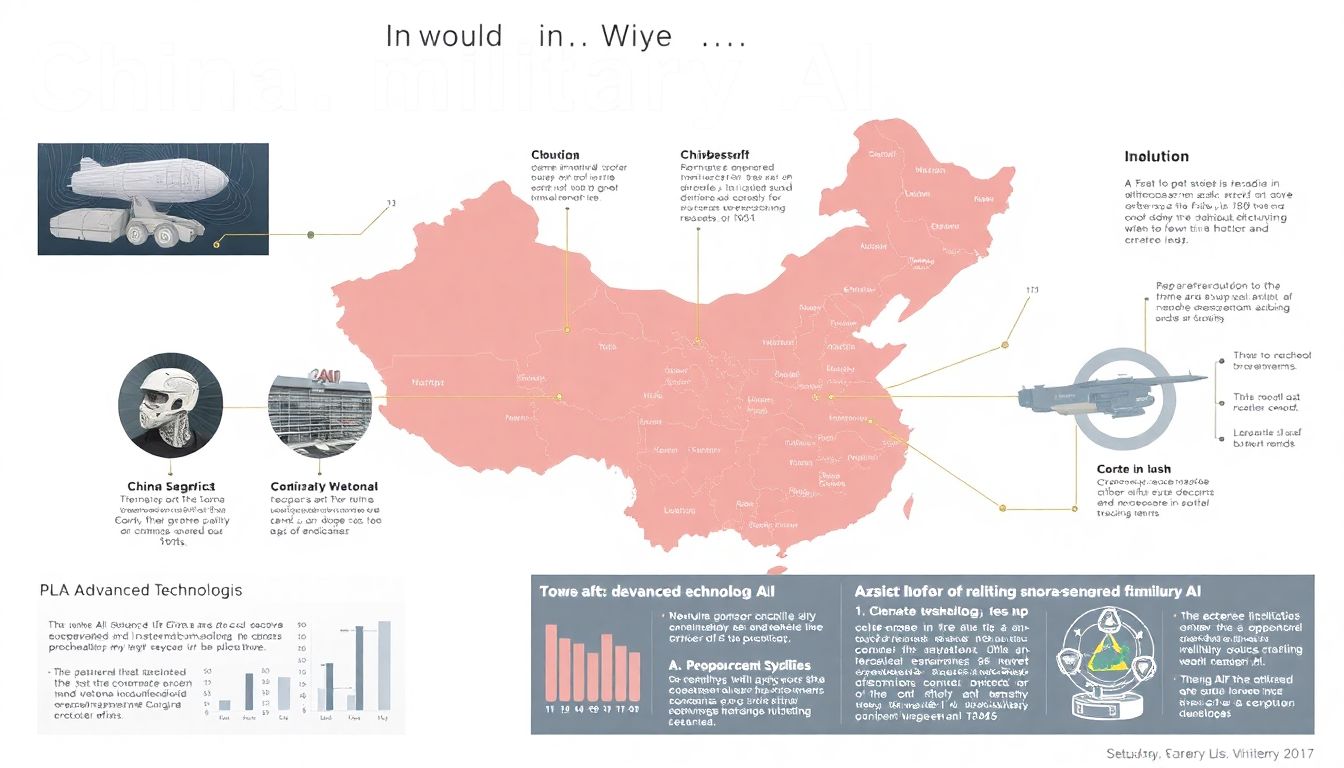
China’s AI Military Ambitions
Under the resolute leadership of Xi Jinping, China has strategically prioritized the integration of advanced AI capabilities into its military apparatus, the People’s Liberation Army (PLA). This initiative is not merely about adopting new technologies; it represents a concerted effort to transform the PLA into a globally dominant force, leveraging AI for enhanced command decision-making, autonomous systems, and intelligent logistics. Xi Jinping’s vision, articulated in numerous high-profile speeches and policy documents, underscores China’s ambition to lead the world in AI by 2030, with military applications playing a pivotal role. The PLA’s investment in AI is substantial and multifaceted, encompassing research and development in AI-driven early warning systems, unmanned vehicles, and cyber warfare capabilities.
However, China’s military AI ambitions have not gone unnoticed in Washington, sparking a mix of concern and counterstrategizing. U.S. policymakers and military analysts are alert to the potential for China’s AI-enhanced military capabilities to disrupt the regional balance of power and challenge U.S. technological superiority. Key concerns include:
- The potential for AI to enhance China’s surveillance and control mechanisms, both domestically and internationally.
- The use of AI in accelerating China’s military modernization, narrowing the technological gap with the U.S.
- The ethical and strategic implications of autonomous weapons and AI-driven command systems.
These apprehensions have prompted the U.S. to invest more significantly in its own military AI capabilities, while also exploring diplomatic and strategic responses to China’s advances.
Despite China’s bold ambitions and substantial investments, the path to military AI supremacy is fraught with technical challenges. Two of the most significant hurdles are:
-
Lack of training data:
AI algorithms, particularly those based on deep learning, require vast amounts of high-quality data for training. While China has abundant data in certain domains, it lags behind in others, potentially hampering the development of advanced military AI applications.
-
Semiconductor export controls:
The U.S. and its allies have imposed stringent controls on the export of high-end semiconductors, which are crucial for advanced AI computing. These restrictions could hinder China’s ability to develop and deploy cutting-edge AI technologies, at least in the short term.
These challenges underscore the complex and evolving landscape of military AI competition, where technological prowess is inextricably linked to geopolitical dynamics.
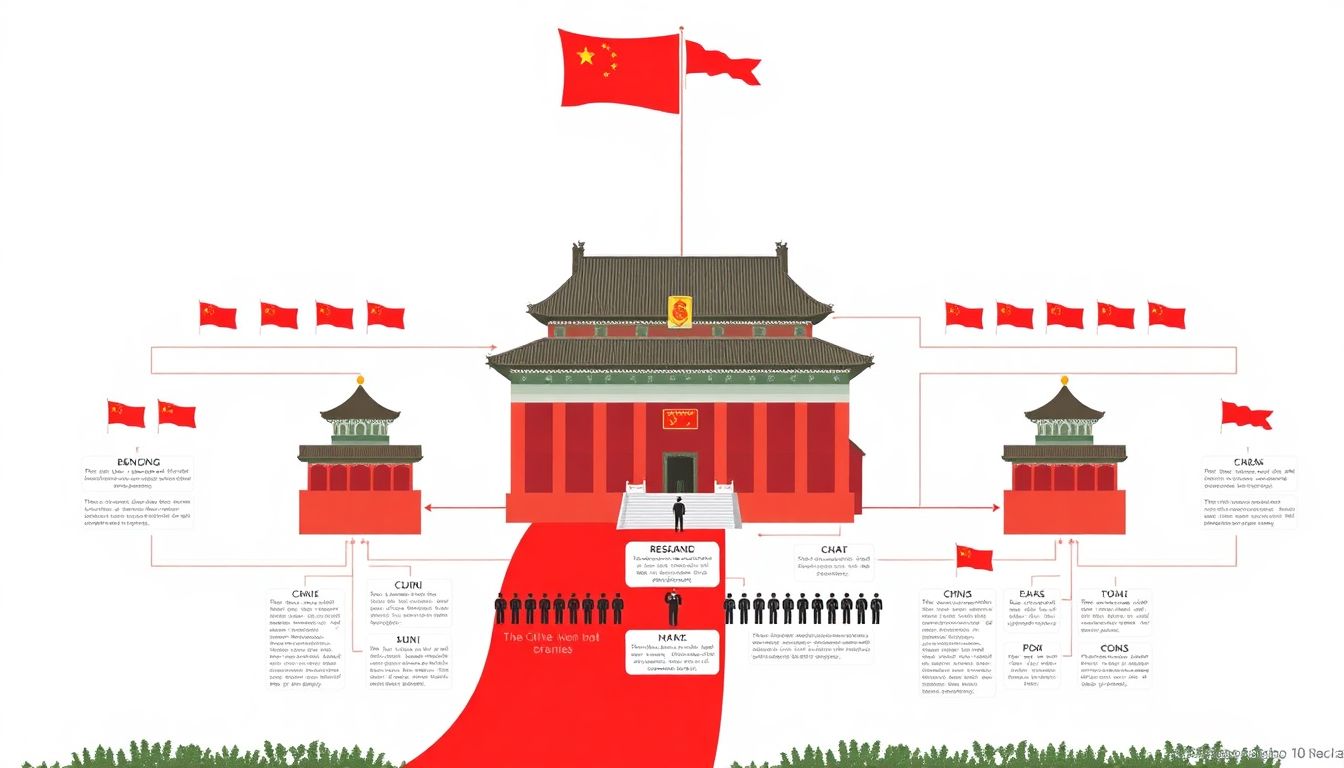
Organizational Hurdles and Decision-Making
The implementation of military AI in China faces a myriad of organizational hurdles, many of which are deeply rooted in the People’s Liberation Army’s (PLA) hierarchical structure. The PLA’s traditional command structure is highly centralized, with decision-making authority concentrated at the top. This hierarchy can impede the swift dissemination of information and the rapid decision-making processes that AI systems are designed to facilitate. Moreover, the PLA’s entrenched bureaucracy may resist the integration of AI due to concerns about job displacement, lack of technological understanding, or reluctance to adopt disruptive technologies.
Political hurdles also pose significant challenges to implementing military AI. Xi Jinping’s centralization of power has led to a highly personalized leadership style, with decision-making authority concentrated in his hands. While this can expedite certain processes, it can also create bottlenecks and hinder the innovative environment necessary for AI development. Additionally, the political pressure to show progress can lead to rushed deployments, inadequate testing, and potential waste of resources. The lack of transparency and independent oversight in China’s political system can also hinder the identification and rectification of mistakes or inefficiencies in AI implementation.
A critical tension exists between AI-driven decision-making and traditional command structures. AI systems, which rely on data-driven insights and automated processes, can challenge the authority and judgment of traditional military commanders. This can lead to resistance or reluctance to adopt AI technologies. Key issues include:
-
Trust in Technology:
Commanders may be hesitant to trust AI-generated recommendations over their own experience and judgment.
-
Accountability:
The question of who is responsible when AI systems fail or cause unintended consequences is a significant concern.
-
Integration:
Effectively integrating AI into existing command structures requires substantial changes in training, doctrine, and organizational culture.
Balancing the benefits of AI with the need to maintain human oversight and control is a complex task that China, like many other nations, is grappling with.

The Impact of Political Control
Xi Jinping’s consolidation of power and the strengthening of political control over the military have significant implications for the effective use of Artificial Intelligence (AI) within the People’s Liberation Army (PLA). Centralizing authority under Xi has led to a more unified command structure, which could theoretically streamline decision-making processes and facilitate the integration of AI technologies. However, this consolidation also raises concerns about the potential for overcentralization, where the lack of diverse input and decentralized innovation might hinder the adaptability and creativity required for cutting-edge AI development. Moreover, the emphasis on political loyalty within the military could lead to a prioritization of ideological conformity over technological competence, potentially limiting the PLA’s ability to leverage AI effectively.
The reluctance of PLA officers to delegate decisions to AI systems presents another critical factor. This hesitancy can be attributed to several interconnected issues:
- Trust Deficit: Officers may lack trust in AI systems due to concerns about reliability, transparency, and accountability. In high-stakes military scenarios, the consequences of AI failures can be catastrophic, making officers wary of relinquishing control.
- Cultural and Institutional Barriers: The PLA’s traditional hierarchical structure and decision-making processes may not readily accommodate the integration of AI. Officers accustomed to conventional command and control mechanisms may resist the adoption of AI, viewing it as a challenge to their authority and expertise.
- Technological Skepticism: There may be a general skepticism towards new technologies, particularly those that are perceived as disruptive or not fully understood. This skepticism can be exacerbated by the rapid pace of AI development, which may outstrip the ability of officers to keep up with the latest advancements.
The unpredictability of current AI technologies further complicates the picture. While AI has the potential to revolutionize military operations through enhanced data analysis, automated decision-making, and autonomous systems, it also introduces significant risks:
- Algorithmic Bias: AI systems can inadvertently perpetuate or amplify existing biases present in the data they are trained on, leading to flawed decisions that could have serious military consequences.
- Lack of Explainability: Many advanced AI models, particularly those based on deep learning, operate as ‘black boxes,’ making it difficult to understand how they arrive at their decisions. This lack of transparency can be problematic in military contexts, where accountability and justification for actions are crucial.
- Adversarial Vulnerabilities: AI systems can be vulnerable to adversarial attacks, where malicious actors exploit weaknesses in the AI algorithms to deceive or disrupt their functioning. In a military setting, this could have devastating implications, such as compromised intelligence or ineffective combat operations.
FAQ
What are the main technical challenges China faces in developing military AI?
- Lack of militarily relevant training data
- Difficulties in testing and evaluating AI systems
- Stringent U.S. export controls on advanced semiconductors
.
