
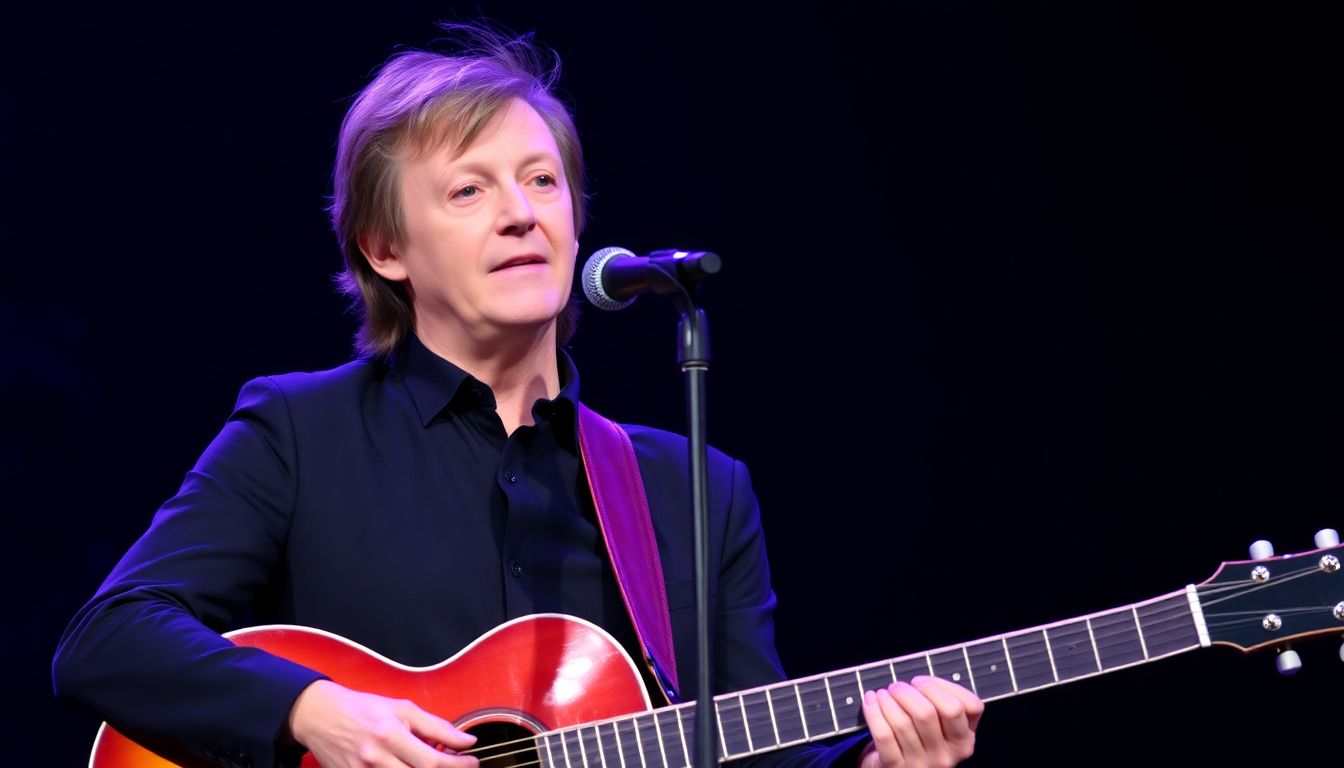
Paul McCartney, the legendary Beatle, has recently expressed concerns about the impact of artificial intelligence on the music industry. Despite initially using AI to resurrect old John Lennon vocals, McCartney now warns that AI could ‘wipe out’ the industry if left unchecked. This shift in opinion comes as the UK parliament debates amending its data bill to protect artists’ work from AI training data. Let’s delve into the details of McCartney’s changing stance on AI and its potential implications for the music world.
The Beatle’s journey from using AI to resurrect Lennon’s vocals to cautioning against its potential domination.
In recent years, Paul McCartney’s evolving stance on Artificial Intelligence (AI) has captured public attention, reflecting the broader societal debate on the technology’s role in creativity and industry. Initially, McCartney embraced AI’s potential when he collaborated with producer Giles Martin and filmmaker Peter Jackson to create ‘Now and Then,’ a new Beatles track generated using AI to isolate and enhance John Lennon’s vocals from old demos. This project, linked to the ‘Get Back’ documentary, showcased AI’s capability to resurrect and reimagine historical content, signaling McCartney’s openness to technological innovation in music.
However, McCartney’s recent statements reveal a more cautious perspective, as he expresses concerns about AI’s impact on the music industry, particularly for young composers and writers. Echoing his fears, Ringo Starr has also weighed in, highlighting the potential for AI to overshadow human creativity and effort. With the upcoming debate in the UK parliament addressing AI’s influence on the creative sector, the broader artist community is divided. Some advocate for strict regulations to protect intellectual property and emerging talent, while others encourage embracing AI as a tool for artistic evolution, reflecting the complex interplay between technology and artistry.

A Very Sad Thing, Indeed
In a recent statement, legendary musician Paul McCartney has expressed his concerns about the potential impact of artificial intelligence on the music industry. McCartney warned that AI could eventually lead to a homogenization of music, where algorithms mimic existing styles and trends, potentially stifling the originality and creativity that young composers and writers bring to the table. He emphasized that the uniqueness of human emotion and experience, which often fuels musical innovation, could be diluted by an over-reliance on AI-generated content.
McCartney’s comments come at a critical time as the UK Parliament prepares to debate changes to its data bill. The proposed amendments could have significant implications for the regulation of AI and its role in creative industries. McCartney’s stance underscores the importance of protecting the integrity of human artistry in the face of technological advancements. His call to action encourages policymakers to consider the long-term effects of AI on cultural diversity and the livelihoods of emerging artists. By taking a stand against AI domination, McCartney hopes to spark a dialogue that balances innovation with the preservation of authentic creative expression.
McCartney’s AI Journey
Paul McCartney’s initial use of artificial intelligence (AI) to isolate John Lennon’s vocals for the track “Now and Then” marked a significant moment in the intersection of music and technology. Utilizing AI developed by filmmaker Peter Jackson’s company, WingNut Films, McCartney was able to extract Lennon’s vocals from old demos, enhancing the quality and allowing for a more integrated production. This innovative application of AI enabled the creation of a poignant and nostalgic track that resonated deeply with fans, as it represented a symbolic reunion of the two Beatles.
The emotional significance of “Now and Then” is profound, serving as a sentimental tribute to the enduring legacy of the Beatles and the enduring bond between McCartney and Lennon. The song’s nomination for a Grammy underscores its impact and artistic merit, touching fans with its nostalgic lyrics and familiar melodies. However, it’s crucial to differentiate between the AI technologies used for this project and the more advanced, generative AI that has sparked controversy. The former focuses on isolation and enhancement, respecting the original content, while the latter can create entirely new content, raising concerns about authenticity and ethical implications. Here are the key differences:
The latest offering from TechInnovate, the SmartWatch X1, has sparked considerable debate among tech enthusiasts. The watch boasts an impressive array of features, including a high-resolution AMOLED display, advanced heart rate monitoring, and built-in GPS. The design is sleek and modern, with a lightweight yet robust titanium case that exudes durability. The user interface is intuitive, allowing for seamless navigation through various apps and settings. However, the battery life has been a point of contention. While TechInnovate claims a 7-day battery life under typical use, many users report needing to recharge every 3-4 days, especially with heavy use of GPS and always-on display features.
The SmartWatch X1 also introduces several innovative health features, such as sleep tracking, stress monitoring, and blood oxygen saturation (SpO2) measurement. These features are particularly appealing to fitness enthusiasts and those looking to monitor their overall well-being. The accompanying mobile app is well-designed and offers detailed analytics and personalized health insights. Nevertheless, the watch faces criticism for its limited third-party app support and occasional syncing issues with the mobile app. Additionally, the price point is significantly higher than its competitors, raising questions about its value for money. Despite these drawbacks, the SmartWatch X1 stands out as a formidable contender in the wearable tech market, offering a blend of style, functionality, and advanced health monitoring capabilities.
