

Delve into the fascinating and complex world of China’s ambitions in military artificial intelligence (AI). This article explores the strategic priorities set by Chinese leader Xi Jinping, the People’s Liberation Army’s (PLA) investments in AI, and the significant obstacles that China faces in realizing its AI-driven military goals. From technical challenges to organizational hurdles, we’ll examine the intricacies of China’s journey towards becoming a global AI superpower in the military domain.
Exploring the Challenges Facing China’s Military AI Ambitions
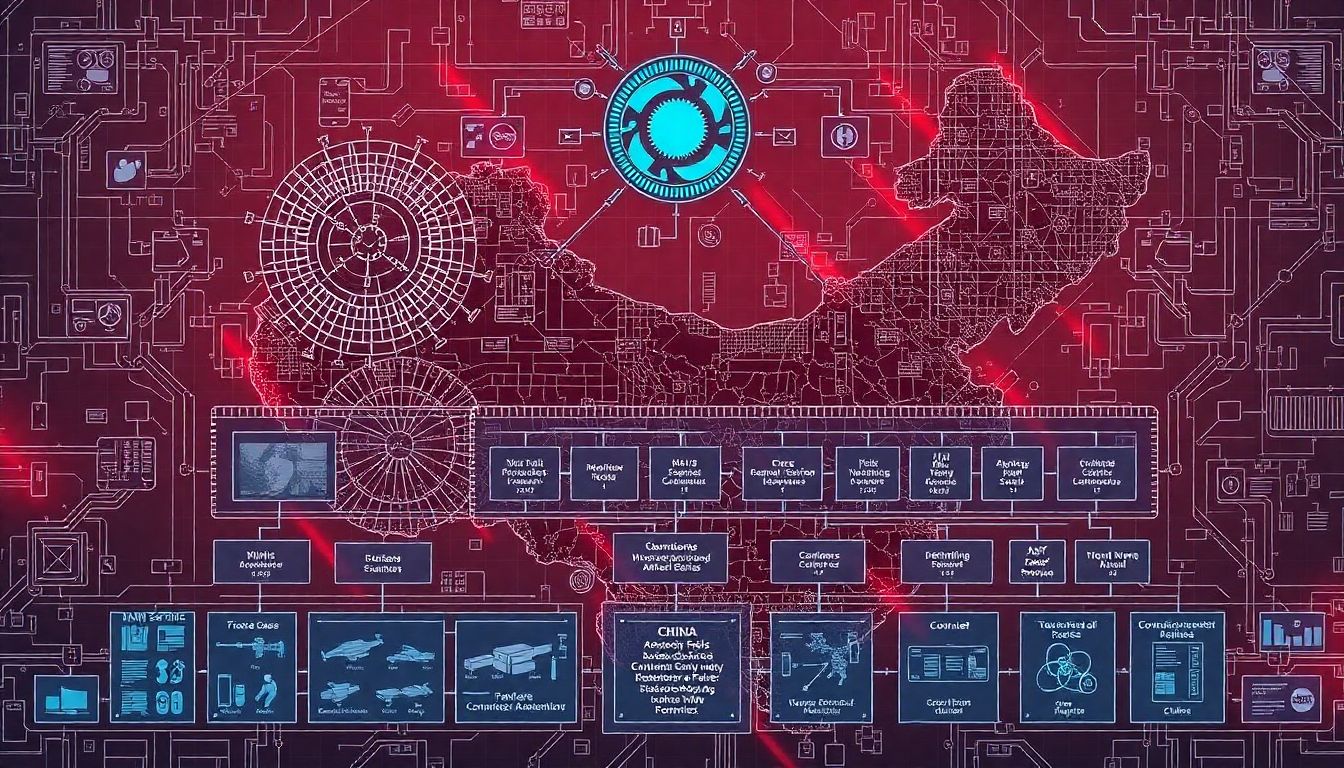
Imagine a sprawling circuit board, where intricate traces and glowing nodes represent China’s advancing military AI capabilities. This is not a simple landscape, but a multilayered topography where data flows like rivers through silicon valleys, and algorithms stack up like mountain ranges. From autonomous drone swarms to AI-enhanced command and control systems, China’s military is actively pursuing an AI-driven future. High-tech giants like Baidu, Alibaba, and Tencent have been enlisted, acting as technological tributaries, feeding the military with innovations birthed from civilian applications.
At the same time, this landscape is not without its obstacles—chasms of data incompatibility, where information from various sources can’t be integrated seamlessly, and peaks of technological hurdles, where theoretical promises of AI still exceed practical capabilities. Moreover, the fog of ethical and geopolitical challenges looms large, casting shadows over the terrain and making the path ahead uncertain.
Yet, China presses on, driven by a strategic vision where AI is the linchpin of future military superiority. This is a landscape of ambition, where each success is a new basecamp, and each setback a temporary detour. It’s a view that’s both awe-inspiring and unsettling, a testament to China’s resolve and a harbinger of the AI-driven military developments to come.
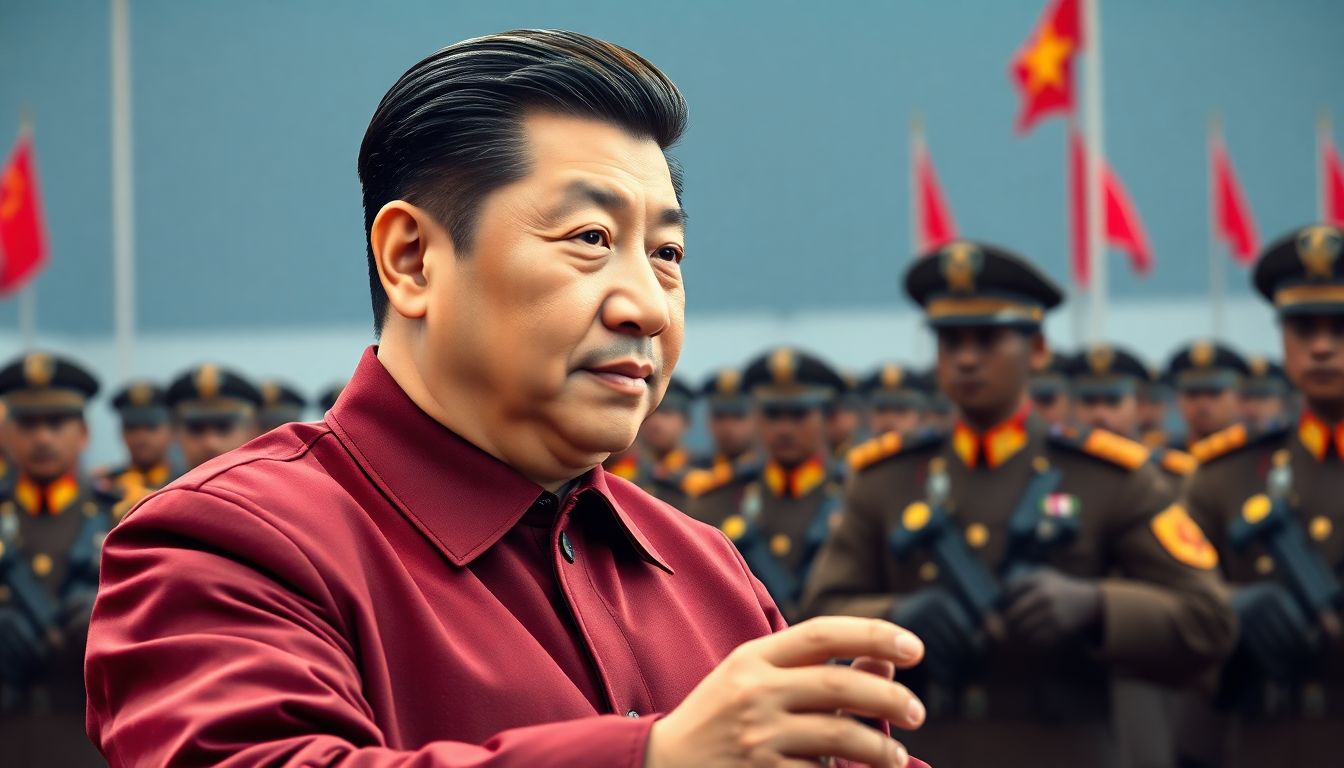
China’s AI Military Ambitions
Under the resolute leadership of Xi Jinping, China has placed a significant strategic emphasis on military artificial intelligence (AI), aiming to transform the People’s Liberation Army (PLA) into a leading global force by leveraging cutting-edge technologies. This focus is driven by the desire to enhance operational effectiveness, achieve technological self-sufficiency, and gain a strategic advantage in the increasingly contested geopolitical landscape. The PLA’s investments in AI are extensive and well-coordinated, with a particular focus on areas such as:
- Autonomous systems, including drones and unmanned ground vehicles
- AI-enhanced decision-making and command-and-control systems
- Advanced sensor and surveillance technologies
- Cyber warfare and electronic warfare capabilities
The goals behind these investments are multifold. Primarily, the PLA seeks to:
- Improve its situational awareness and intelligence capabilities through advanced AI-driven data analysis and processing
- Enhance the speed and accuracy of decision-making through AI-assisted command systems
- Augment combat capabilities through the deployment of autonomous weapons and vehicles
- Strengthen its deterrence and power projection capabilities in line with China’s growing global ambitions
However, China’s rapid advancements in military AI have raised significant concerns in Washington. U.S. policymakers and military leaders are closely monitoring China’s progress, wary of the potential for these technologies to erode the United States’ competitive military edge. Key concerns include:
- The potential for China to achieve technological parity or even superiority in certain AI-driven military applications
- The use of AI to enhance China’s coercive capabilities in disputed territories, such as the South China Sea
- The implications of China’s military AI developments for regional and global security dynamics
- The need for the U.S. to accelerate its own AI initiatives and maintain a robust defense innovation base to counter China’s advances
Technical and Organizational Hurdles
China’s military AI development faces several technical challenges that could hinder its progress towards parity with global leaders. One of the most significant obstacles is the lack of training data. AI algorithms rely on vast amounts of high-quality data to learn and improve, but China’s data environment is hampered by issues such as data silos, privacy concerns, and inadequate data-sharing mechanisms. Moreover, the Chinese military, known as the People’s Liberation Army (PLA), faces testing difficulties due to the lack of a combat-proven, modern battlefield experience. This makes it challenging to create realistic scenarios for testing and validating AI systems. Additionally, semiconductor export controls imposed by the United States and other countries have restricted China’s access to high-performance computing hardware essential for training and deploying advanced AI models.
Beyond technical hurdles, the PLA also grapples with organizational challenges that could impede its AI ambitions. The PLA’s hierarchical structure, with its centralized decision-making processes, can slow down innovation and hinder the rapid deployment of AI technologies. Furthermore, the PLA’s traditional focus on manpower and conventional weapons may lead to a lack of prioritization and resources for AI development. The PLA’s organizational culture and structure may not be well-suited to fostering the agility and innovation required for cutting-edge AI research and development.
Political factors also play a significant role in shaping China’s military AI landscape. Xi Jinping’s centralization of power has led to a highly centralized decision-making process that could stifle innovation and initiative at lower levels. While this centralization can help align resources and priorities, it can also create bottlenecks and discourage the free flow of ideas. Additionally, the political emphasis on civil-military integration and military-civil fusion presents both opportunities and challenges. While this approach can facilitate the transfer of technology and talent between the military and civilian sectors, it can also lead to
- diffusion of efforts
- misalignment of priorities
- potential security risks
. Navigating these political dynamics will be crucial for China as it advances its military AI capabilities.
Decision-Making and Political Control
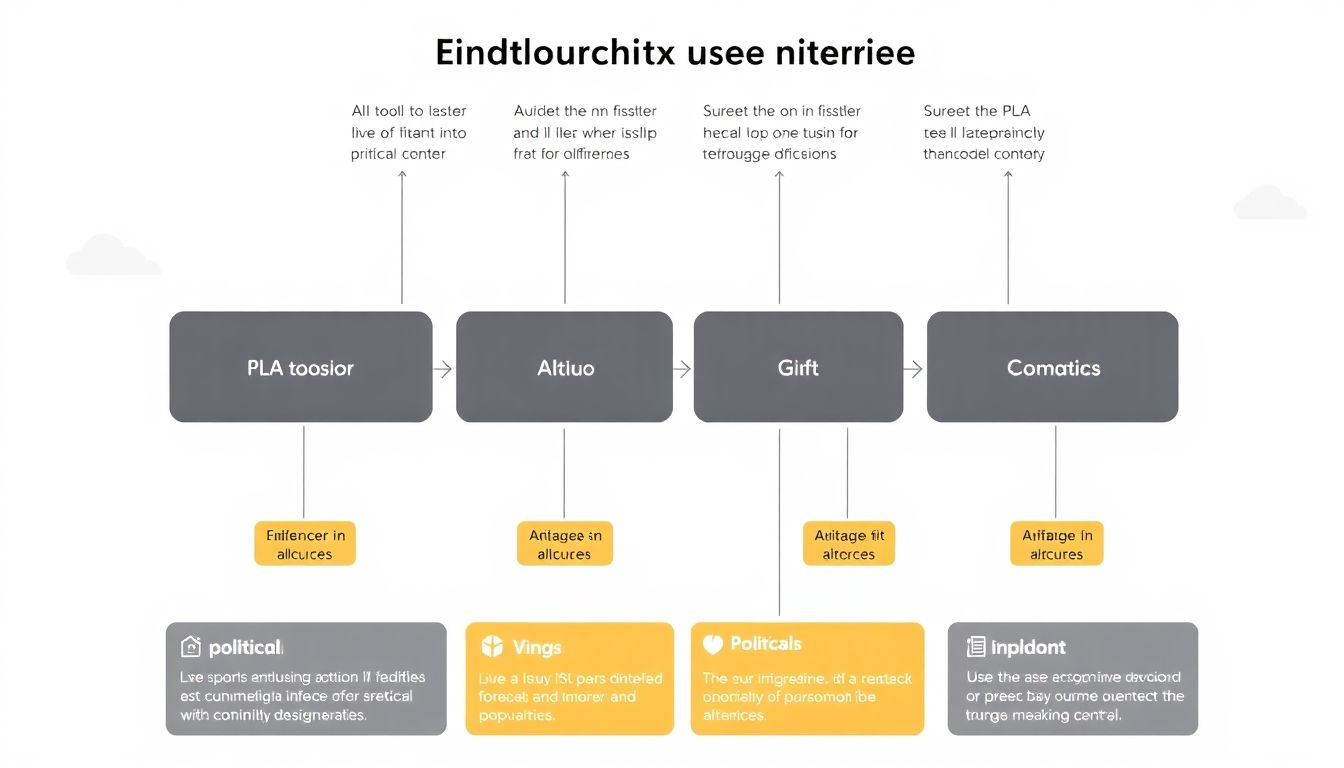
The People’s Liberation Army (PLA) faces significant decision-making difficulties, primarily stemming from its complex hierarchy and centralized command structure. Several issues contribute to this challenge:
-
Information Silos:
The PLA’s stovepiped structure leads to compartmentalized information, hindering fluid communication and coordination among different service branches.
-
Rigid Command Chain:
The centralized command system often results in delayed responses and inefficient tactical decisions, as lower-level commanders wait for approval from higher-ups.
-
Political Interference:
The political commissar system, which runs parallel to the military command structure, can lead to decisions being influenced by political considerations rather than tactical necessity.
While Artificial Intelligence (AI) promises to streamline information flow and enhance data-driven decision-making, it may not fully address these issues.
AI integration in the PLA, while offering improved situational awareness and predictive analytics, faces several barriers. Firstly, data sharing and integration remain challenging due to the PLA’s compartmentalized structure. Without a unified data architecture, AI’s effectiveness is limited. Secondly, trust and acceptance of AI among PLA commanders is not guaranteed. Commanders may be reluctant to rely on AI recommendations, especially in high-stakes situations. Lastly, AI’s black-box problem—the lack of explainability in AI decision-making—could exacerbate trust issues and hinder widespread adoption.
Xi Jinping’s consolidation of power, while aimed at enhancing military effectiveness, presents a double-edged sword for AI integration. On one hand, centralized authority can expedite AI adoption by mandating its use and allocating resources. On the other hand, this centralization could exacerbate existing decision-making bottlenecks. With power concentrated at the top, there’s a risk of over-reliance on AI for strategic decisions, while tactical decisions remain bogged down in the rigid command chain. Moreover, political considerations may further influence AI use, with the political commissar system potentially hindering objective, data-driven military operations. Effective use of AI in the PLA requires not only technological advancements but also organizational and cultural changes that promote decentralized decision-making and data sharing.
FAQ
What are the primary technical challenges facing China’s military AI development?
- Lack of militarily relevant training data
- Difficulties in testing and evaluating AI systems
- Stringent U.S. export controls on advanced semiconductors
.
