
Welcome to our exploration of how AI technology is transforming education, particularly for students with disabilities. This article delves into the innovative ways AI is leveling the playing field, making learning more accessible and inclusive. Join us as we journey through the stories of students whose lives have been positively impacted by these advancements, and discover the broader implications for education worldwide.
Discover how AI is revolutionizing education for students with disabilities, opening doors to new opportunities and inclusivity.
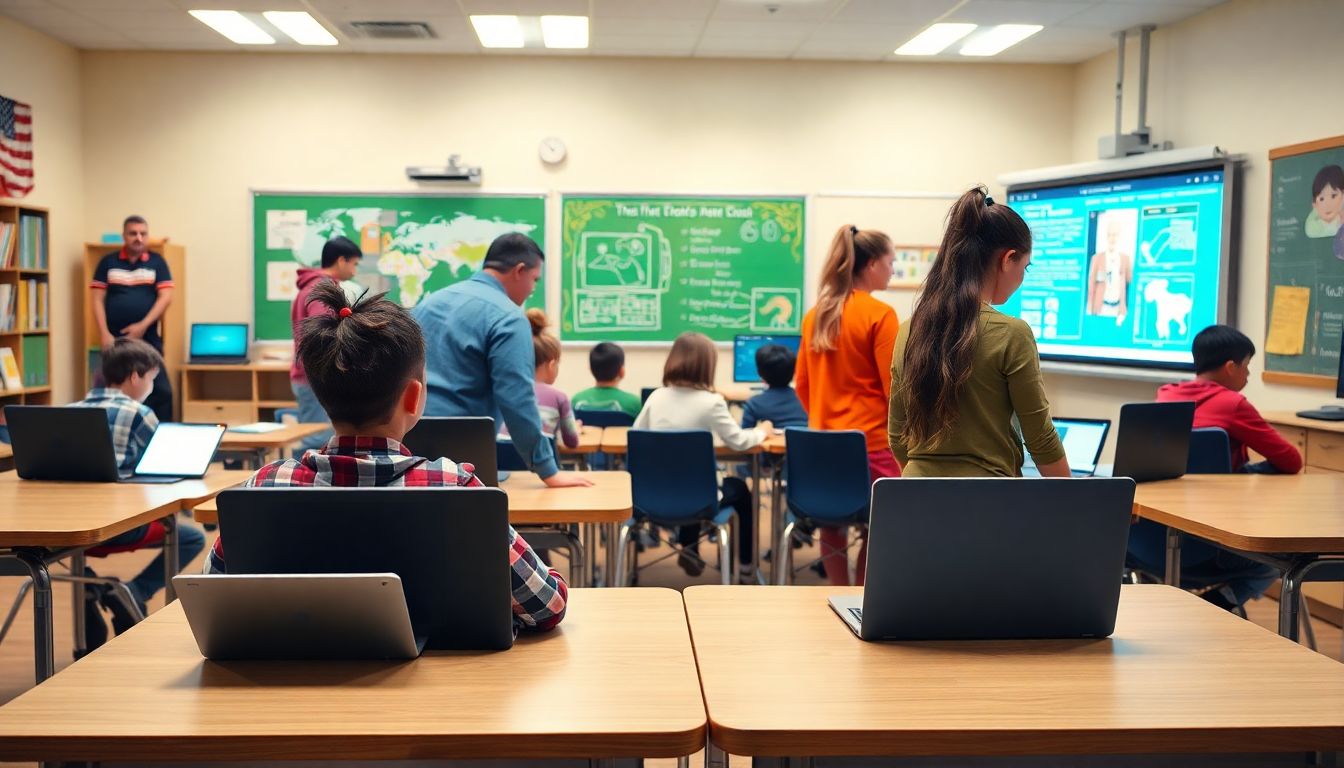
Imagine a classroom bathed in the soft glow of interactive smartboards, a vibrant hum of activity filling the air. Students, each unique in their abilities and needs, are engrossed in their tasks, their eyes sparkling with curiosity. A student with dyslexia is using a tablet equipped with AI-powered text-to-speech software, the words flowing from the device in sync with the highlighted text, enabling him to follow along with ease. Nearby, a non-verbal student is communicating via a laptop that translates her typed words into spoken language, her smile widening as her classmates understand and respond.
The teacher, a dynamic figure, moves fluidly among the students, her tablet in hand. She uses it to control the smartboard, switching between interactive lessons and real-time assessments. She pauses to help a student with autism, his laptop displaying a personalized learning module that the AI has tailored to his specific needs. The teacher’s stylus taps and swipes, adjusting the settings to better fit his learning pace, demonstrating the seamless integration of technology and human touch.
In the back of the room, a group of students with varying physical disabilities are working together on a project, their wheelchairs and assistive devices clustered around a large touchscreen table. The AI recognizes each student’s input, adjusting the display and tools accordingly. One student uses voice commands, another uses a mouth-operated joystick, and yet another uses eye-tracking technology. Their laughter and collaboration fill the air, a testament to the inclusive atmosphere that permeates the classroom, where every student is empowered to learn and contribute in their own unique way.

Makenzie’s Journey: Overcoming Dyslexia with AI
In the quiet suburbs of Indianapolis, Makenzie Gilkison, a vibrant 14-year-old, has been navigating her academic journey with a unique challenge—dyslexia. This learning difference has made spelling an uphill battle for Makenzie, turning words into puzzles that often left her feeling overwhelmed and disheartened. Traditional teaching methods didn’t always resonate with her, leaving her parents and teachers searching for alternative solutions to help her keep up with her peers.
Enter the world of Artificial Intelligence (AI), where customized chatbots and word prediction programs have become Makenzie’s superheroes in the classroom. These AI-powered tools have offered her a lifeline, providing personalized learning experiences that adapt to her needs. Here’s how they’ve made a difference:
- Real-time assistance: Word prediction programs, equipped with advanced algorithms, suggest correct spellings as Makenzie types, reducing her anxiety and allowing her to focus more on expressing her thoughts.
- Interactive learning: Customized chatbots provide a non-judgmental, patient platform for Makenzie to practice and improve her spelling. They offer instant feedback and tailored exercises, making learning more engaging and effective.
- Consistency: These tools provide consistent support, enabling Makenzie to work at her own pace, both in and out of the classroom.
The impact of these AI tools on Makenzie’s academic life has been nothing short of transformative. With her newfound confidence in spelling, she’s been able to catch up with her peers and even surpass expectations. Her hard work and perseverance, coupled with the support of these innovative learning aids, have led to her being named to the National Junior Honor Society—a testament to her remarkable progress and the power of AI in education.
The Promise of AI in Special Education
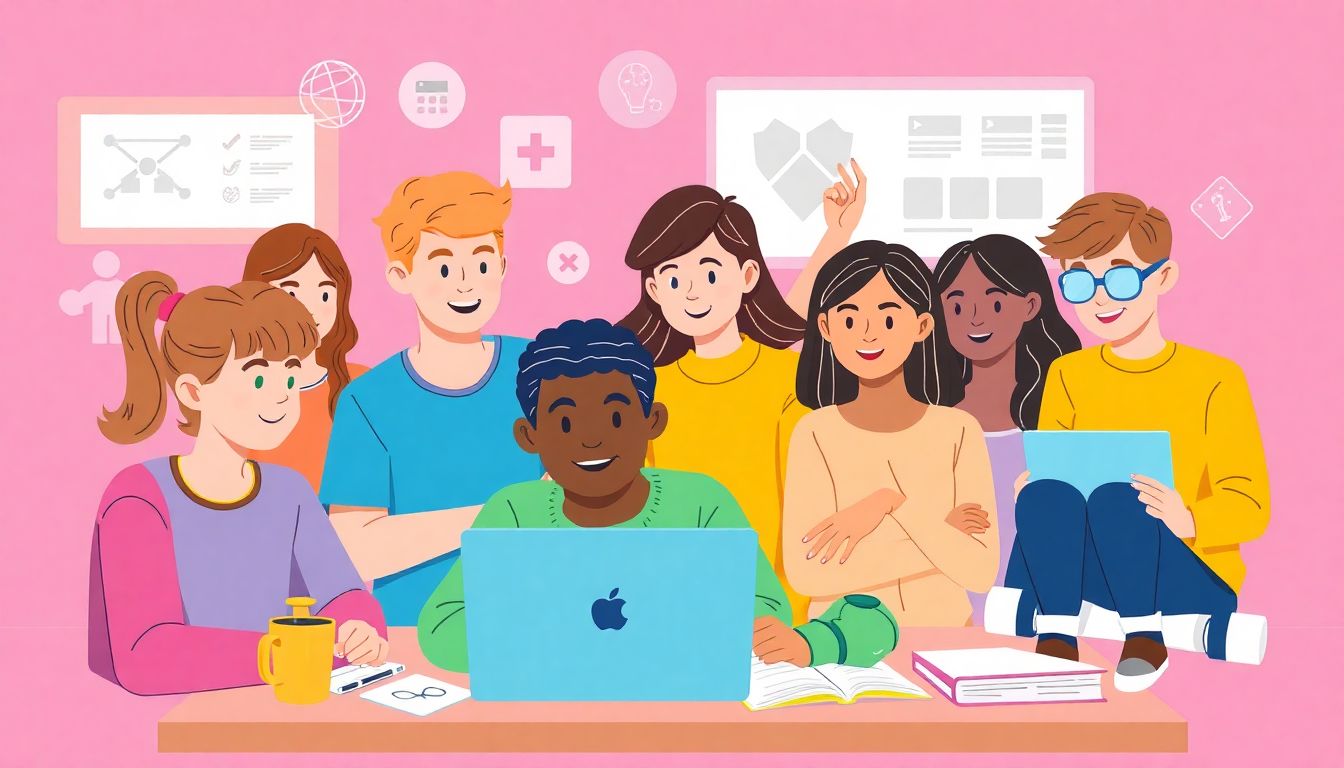
The rise of Artificial Intelligence (AI) in education has sparked a significant shift in how students with visual, speech, language, and hearing impairments are taught and supported. AI-driven tools such as text-to-speech software, speech recognition systems, and real-time captioning services are transforming the learning landscape, offering unprecedented accessibility and personalization. For visually impaired students, AI can generate detailed audio descriptions of visual content, while speech recognition tools allow students with speech impairments to communicate more effectively. Similarly, real-time captioning and language prediction tools support students with hearing and language impairments, ensuring they can engage with educational material more comprehensively.
Schools across the country are fast-tracking the implementation of these AI applications, recognizing their potential to bridge educational gaps for students with disabilities. This acceleration is driven by the need to comply with federal regulations and to create more inclusive learning environments. The U.S. Department of Education and the Department of Justice have set clear priorities, emphasizing the importance of accessible educational materials and technologies. These departments have issued guidelines and funding opportunities to encourage the adoption of AI tools that meet the diverse needs of students with disabilities. Key initiatives include:
- Promoting the development and use of AI-powered assistive technologies that are compatible with existing educational platforms.
- Encouraging partnerships between educational institutions, technology companies, and disability advocacy groups to foster innovation and ensure that AI tools are user-friendly and effective.
- Ensuring that schools provide adequate training for educators and support staff on the use of AI technologies, so they can effectively integrate these tools into their teaching practices.

Balancing Benefits and Challenges
The integration of Artificial Intelligence (AI) in education presents a complex landscape of ethical considerations and practical challenges. On one hand, AI offers immense potential to revolutionize learning experiences. AI-driven tools can provide personalized learning paths, adapt to individual student needs, and offer round-the-clock support, thereby democratizing access to education. However, the ethical implications are profound. Over-reliance on AI could lead to a diminished role for human educators, potentially resulting in job displacement. Moreover, there are concerns about data privacy and the potential for algorithmic bias, which could inadvertently perpetuate or even exacerbate existing inequalities. Educators express caution, emphasizing the need for transparency and accountability in AI systems to ensure they augment rather than replace human teaching.
Balancing the use of AI to assist students while ensuring they are still learning is a delicate task. AI can automate grading, provide instant feedback, and even generate practice problems tailored to a student’s understanding. Yet, there is a risk that over-reliance on these tools could hinder the development of critical thinking and problem-solving skills. Students might become too dependent on AI for answers rather than engaging in the learning process. To mitigate this, educators advocate for a blended approach where AI supplements traditional teaching methods. This hybrid model can leverage AI for routine tasks, freeing up educators to focus on higher-order thinking skills and meaningful interactions with students.
Perspectives from both educators and students highlight the benefits and potential risks of AI in the classroom. Students appreciate the convenience and accessibility of AI tools, such as intelligent tutoring systems and adaptive learning platforms. These tools can make learning more engaging and efficient. However, some students express concerns about the lack of human interaction and the potential for AI to miss nuanced aspects of learning that a human teacher would catch. Educators, on the other hand, see AI as a powerful ally that can help manage administrative tasks and provide data-driven insights into student performance. Nevertheless, they stress the importance of maintaining a human touch in education. Key points from both perspectives include:
- Enhanced personalization and accessibility
- Concerns about over-reliance and skill development
- Need for transparency and human oversight
- Potential for administrative support and data-driven insights
FAQ
What are some common AI tools used by students with disabilities?
- Text-to-speech programs read text aloud for visually impaired or dyslexic students.
- Word prediction software helps students with writing difficulties by suggesting words as they type.
- AI-powered chatbots provide personalized learning assistance and support.
