
Welcome to our exploration of AI in music! In this article, we’ll delve into the fascinating world of AI-generated music, the tools available, and the philosophical questions surrounding the use of AI in artistic creation. Join us as we uncover the potential and limitations of this cutting-edge technology.
Exploring the Intersection of Artificial Intelligence and Music
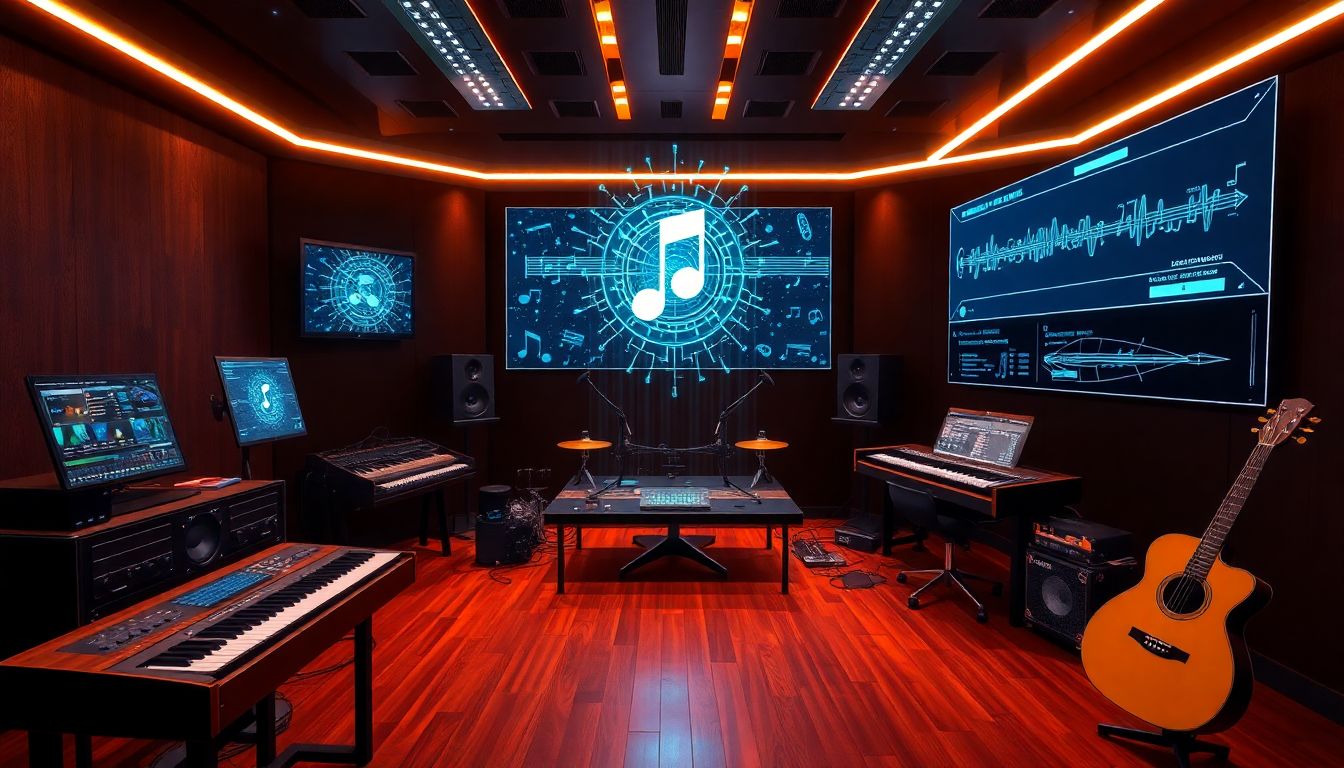
Imagine stepping into a futuristic music studio, where the air is filled with AI-generated holographic instruments that shimmer in the dim light. A grand piano materializes before your eyes, its keys pulsating with a soft glow, ready to be played. Nearby, a holographic drum kit hovers, each piece perfectly rendered down to the smallest cymbal. Guitars, violins, and even a full orchestra can manifest at a moment’s notice, all thanks to the advanced AI that powers this creative haven.
The heart of the studio is a sprawling digital interface that stretches across the walls, displaying a symphony of musical notes and waveforms in real-time. This interface is not just a visual spectacle; it’s a tactile experience. With a simple gesture, you can manipulate the notes, adjust the waveforms, and even compose entire symphonies with unprecedented precision. The AI doesn’t just generate instruments; it learns from your compositions, offering suggestions, improving arrangements, and even collaborating with you on new pieces. This is more than a studio; it’s a living, breathing musical ecosystem where technology and creativity coalesce into a harmonious union.
The Rise of AI Music Tools
The digital landscape has witnessed a remarkable surge in AI-driven music tools, with platforms like Suno and Moises leading the charge. These tools have sparked significant interest due to their impressive capabilities. Suno, for instance, offers an intuitive platform for generating and customizing music using AI algorithms, making it accessible even to those without formal musical training. Moises, on the other hand, focuses on AI-powered music separation, allowing users to isolate vocals, drums, bass, and other instruments from any song. This capability opens up new avenues for remixing, sampling, and practicing with isolated tracks.
However, a notable trend among these AI music tools is the limited availability of free options. While both Suno and Moises offer free tiers, these are often restricted in terms of features and usage. For example, Suno’s free plan might limit the number of tracks that can be generated, while Moises may cap the length of tracks that can be processed. This strategy is likely a response to revenue pressure, as these companies need to monetize their services to sustain development and growth. The hype surrounding these technologies is thus tempered by the reality of financial constraints, which can influence user adoption and overall market penetration.
AI in Music Education
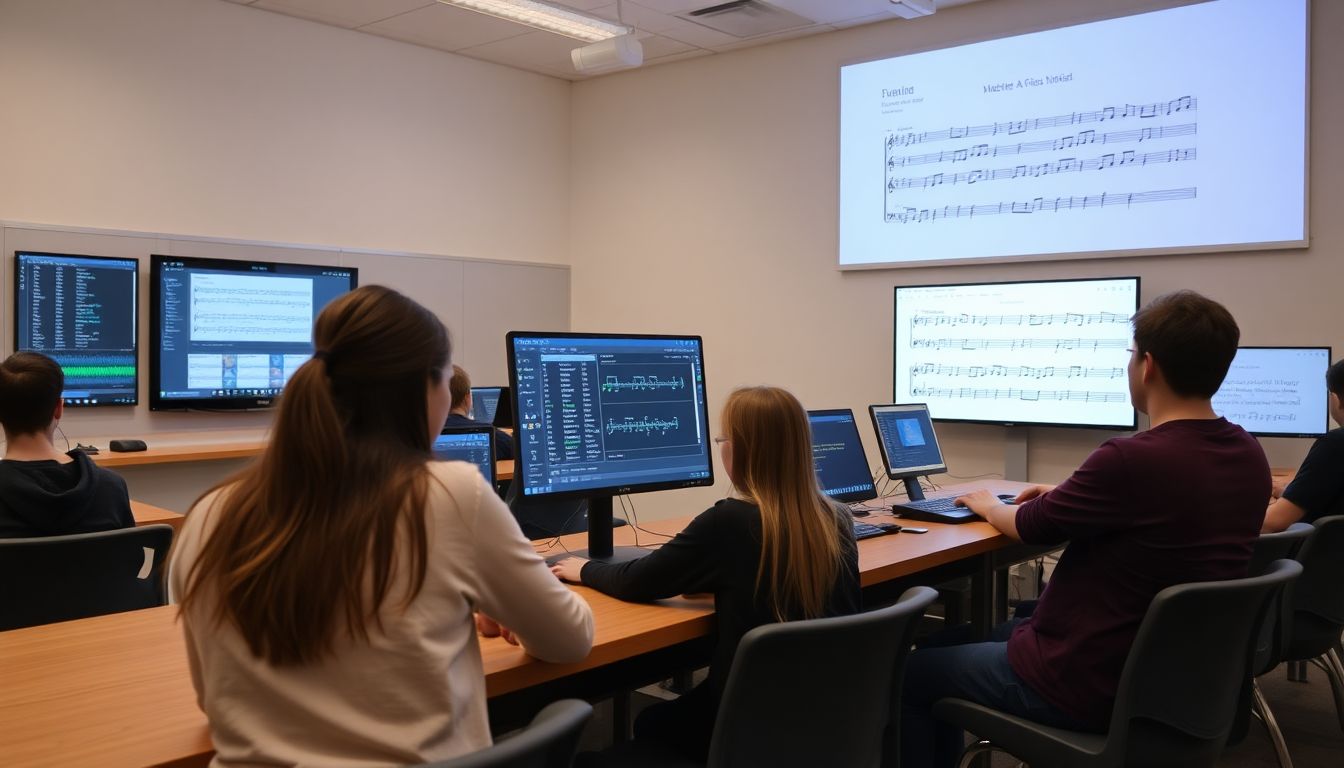
The potential of AI in music education is vast and multifaceted, offering innovative ways to enhance learning and appreciation. Tools like MIDI (Musical Instrument Digital Interface) can be integrated with AI to create interactive learning experiences. AI can generate personalized music exercises, provide instant feedback on performances, and even compose simple pieces to illustrate theoretical concepts. AI chatbots can serve as virtual music tutors, offering 24/7 support and answering student queries in natural language. They can explain music theory, suggest practice routines, and provide encouragement, making music education more accessible and engaging.
However, while the prospects are exciting, there are notable challenges and limitations to consider. AI, being dependent on the data it’s fed, may struggle with the nuances and subjectivity inherent in music. It can’t replicate the human touch, emotion, or cultural context that a traditional music teacher brings. Additionally, AI might oversimplify complex concepts, leading to a superficial understanding. There are also ethical considerations, such as data privacy, and the potential for over-reliance on AI, which could hinder the development of critical thinking skills. Moreover, the digital divide could exacerbate educational inequities, as not all students have equal access to AI-powered tools. Here’s a breakdown of the points:
- Limited understanding of musical nuances and subjectivity
- Lack of human touch, emotion, and cultural context
- Potential for oversimplification of complex concepts
- Ethical considerations like data privacy
- Potential over-reliance on AI hindering critical thinking
- Digital divide and educational inequities

The Human Element in AI Music
The emergence of AI in art has sparked a philosophical debate that questions the very essence of creativity and the human experience. At the core of this discourse lies the distinction between assistance and replacement. AI, with its advanced algorithms and pattern recognition, can generate innovative designs, compose music, or even write poetry. It can provide artists with new tools and possibilities, enabling them to explore uncharted territories and expand their creative horizons. For instance, AI can help create unique color palettes, suggest compositional structures, or even generate novel musical harmonies. However, the crux of the argument is that while AI can assist in the creative process, it cannot replace the human experience that is intrinsically linked to art.
The human experience is a complex amalgam of emotions, cultural context, personal history, and conscious introspection. When an artist creates, they draw from this rich well of experiences, imbuing their art with a depth and resonance that AI currently cannot replicate. Similarly, when consumers engage with art, they do so with their own set of experiences and emotions, creating a unique and personal connection. This is not to dismiss the potential of AI in art; rather, it is to acknowledge that AI operates differently. It can generate aesthetically pleasing or technically proficient pieces, but it does so based on data and patterns, not personal experiences or emotions. Thus, the debate is not about the validity of AI-generated art, but about the significance of the human touch in creative endeavors. It raises questions such as:
- Can art devoid of human emotion still evoke emotional responses?
- Is the value of art intrinsically linked to the human experience?
- Should AI-generated art be evaluated on the same scale as human-created art?
FAQ
What are some popular AI music tools available today?
How can AI be used in music education?
What are the limitations of AI in music creation?
Why is there a lack of free options for AI music tools?
How can students benefit from using AI in music?
- Enhanced understanding of music theory through interactive tools
- Ability to create and manipulate MIDI files
- Analysis of favorite tracks to understand musical structure
- Exposure to code generation and troubleshooting
