

Welcome to our in-depth exploration of the tech landscape in 2024, where we delve into the rapid advancements and geopolitical tensions shaping the AI race. Join us as we uncover the innovative strides China is making in AI, the impact of US chip restrictions, and the global implications of these developments. Buckle up for an insightful and engaging journey through the cutting-edge world of artificial intelligence!
Exploring the Rapid Advancements and Geopolitical Tensions in the AI Race
Imagine stepping into the Shanghai of 2050, where the skyline is a mesmerizing blend of steel and light, a spectacle orchestrated by the rapid advancement of AI technology in China. The cityscape is a living, breathing entity, its surfaces shimmering with AI-generated holograms that dance and flicker, transforming buildings into ephemeral canvases of art and information. These holograms are not mere decorations; they are interactive portals into the city’s digital nervous system, providing real-time updates on everything from traffic flow to environmental conditions, and offering personalized recommendations for dining, entertainment, and more.
At street level, the scene is equally futuristic. Robots of all shapes and sizes move seamlessly among the human population, each a testament to China’s prowess in AI and robotics. Delivery bots weave in and out of pedestrian traffic, their routes optimized by AI algorithms to ensure swift and efficient service. Meanwhile, repair and maintenance bots can be seen scaling buildings and disappearing into underground tunnels, their actions guided by predictive AI models that anticipate and address infrastructure issues before they become problems.
In this future cityscape, AI is not just a tool; it is the lifeblood of the city, a pervasive and intelligent presence that touches every aspect of urban life. From the holographic art installations that adorn the city’s walls to the robots that keep its streets clean, AI is the invisible hand that shapes and maintains this futuristic utopia. It is a testament to China’s commitment to innovation and technological advancement, a vision of the future that is both inspiring and thought-provoking.

The Rise of Chinese AI Services
The landscape of generative AI services in China is witnessing a remarkable proliferation, driven by a convergence of factors including policy support, technological advancements, and user enthusiasm. Tech-savvy users like Shi Yuxiang, a software engineer from Beijing, exemplify this trend. Shi has transformed his apartment into a smart home, utilizing AI to control lights, adjust room temperature, and even monitor his health. He represents a growing segment of the Chinese population eager to embrace AI-driven innovations.
The competitive landscape for generative AI in China is intensifying, with both tech giants and start-ups vying for dominance. Established players like Baidu, Alibaba, and Tencent are investing heavily in AI research and development, each aiming to carve out a significant market share. Baidu, for instance, has developed Ernie Bot, a conversational AI service poised to compete with global counterparts. Meanwhile, start-ups such as Megvii and SenseTime are leveraging their agility to innovate rapidly, often specializing in niche areas like facial recognition and deep learning platforms.
Several factors contribute to China’s burgeoning AI ecosystem:
- Government Initiatives: The Chinese government’s Next Generation Artificial Intelligence Development Plan outlines a strategic roadmap to become a global leader in AI by 2030, providing substantial funding and policy support.
- Talent Pool: China boasts a vast and growing talent pool of AI researchers and engineers, many of whom are returning from overseas with advanced degrees and industry experience.
- Data Availability: The sheer volume of data generated by China’s large population and digital infrastructure provides a rich resource for training and refining AI models.
This confluence of elements positions China as a formidable player in the global AI arena, with home-grown services increasingly competing on an international scale.

China’s AI Catch-Up: Rapid Development and Innovation
In the realm of artificial intelligence (AI), Chinese companies have swiftly narrowed the gap with their Western counterparts, showcasing remarkable advancements that have captured global attention. This rapid ascent is not merely coincidental but a result of strategic government initiatives, substantial investments, and a robust ecosystem fostering innovation. One of the most notable areas where Chinese firms have made significant strides is in AI-driven video tools. Companies like SenseTime and Megvii have developed sophisticated facial recognition and video analysis technologies, which have been integrated into various applications, from security and surveillance to entertainment and social media.
Several key developments have propelled Chinese companies to the forefront of AI video tools.
-
Data Availability:
China’s vast population and the prevalence of digital services have provided these companies with an immense amount of data to train their AI models.
-
Government Support:
Initiatives such as ‘Made in China 2025’ and the ‘Next Generation Artificial Intelligence Development Plan’ have offered substantial funding and policy backing, catalyzing AI research and development.
-
Talent Pool:
Chinese tech giants have attracted and nurtured top AI talent, both locally and from abroad, further enhancing their capabilities in this domain.
Beyond video tools, Chinese firms have also made significant progress in AI reasoning models, which are crucial for tasks requiring logical inference, prediction, and decision-making. Companies like Baidu and Tencent have invested heavily in developing advanced reasoning models that can compete with those from Western leaders such as Google and IBM. Notably, Baidu’s Ernie (Enhanced Representation through kNowledge IntEgration) model has shown impressive capabilities in natural language understanding and reasoning. Additionally, Tencent’s AI Lab has made breakthroughs in reinforcement learning, enabling more sophisticated reasoning in dynamic environments. These advancements underscore China’s commitment to pushing the boundaries of AI, positioning the country as a formidable player in the global AI landscape.
The Impact of US Chip Restrictions
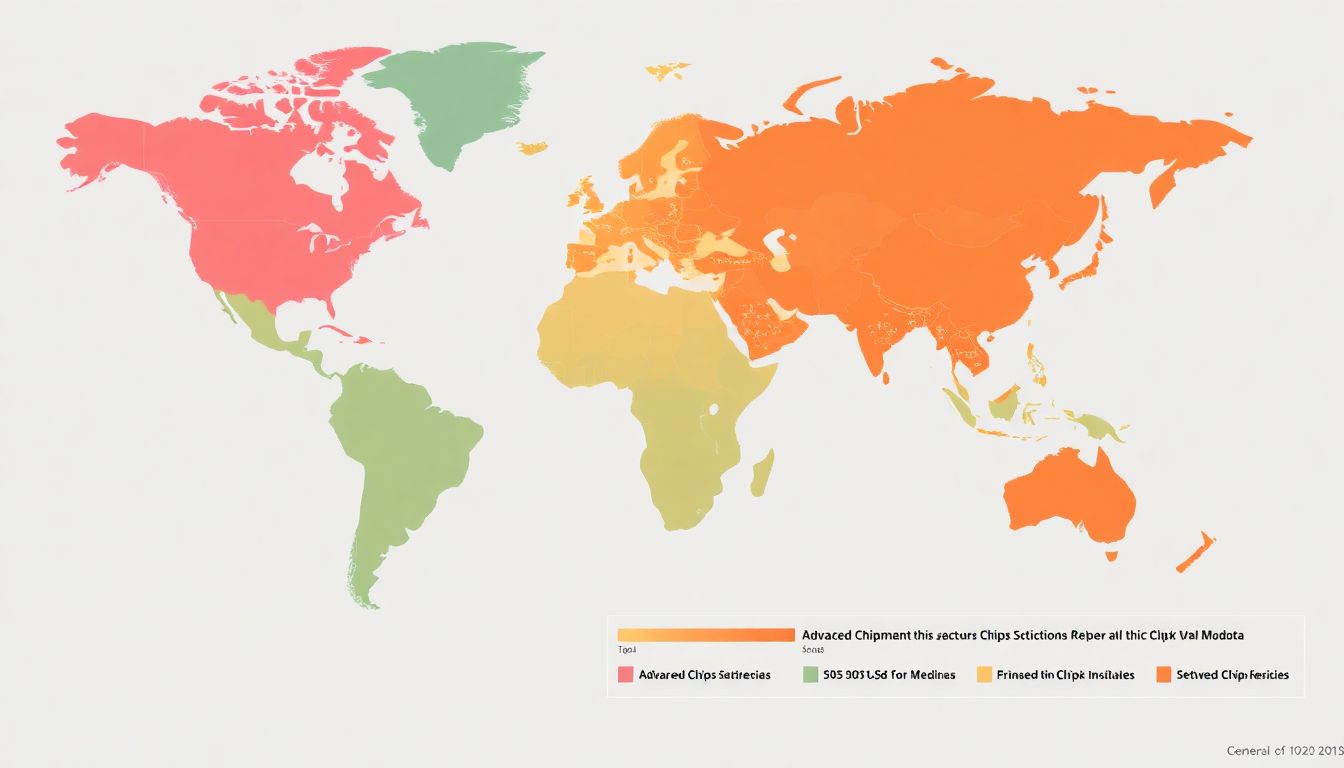
The recent US trade restrictions on advanced chips pose significant challenges to Chinese tech firms, which are heavily reliant on these components for their products and services. The restrictions, aimed at curbing China’s technological advancements, present several potential obstacles. Firstly, the supply chain disruptions may lead to a shortage of high-end chips, impacting the production and innovation capabilities of Chinese tech companies. Secondly, the restrictions could hinder these firms’ ability to compete globally, as they may struggle to match the performance and efficiency of international rivals with access to cutting-edge technology. Lastly, the long-term effects could include a slowdown in China’s semiconductor industry growth and reduced investment in the sector.
To mitigate these challenges, Chinese tech firms are employing several strategies. One key approach is the acceleration of domestic semiconductor development. Companies are investing heavily in research and development to reduce their dependence on foreign technology. This includes collaborations with local universities and research institutions to foster innovation. Additionally, firms are exploring alternative supply chains and partners to secure necessary components.
Moreover, Chinese tech firms are diversifying their product offerings to reduce their reliance on high-end chips. This involves focusing on markets and applications where advanced chips are not crucial. Some companies are also adopting a “de-Americanization” strategy, which involves shifting away from US technologies and markets. This approach may include:
- Expanding into other international markets, such as Southeast Asia, Europe, and Africa.
- Investing in alternative technologies, like open-source solutions, to replace US-origin technologies.
- Strengthening partnerships with non-US companies to secure critical components and technologies.
While these strategies may help alleviate some pressures, their effectiveness remains to be seen in the long run.
FAQ
What are generative AI (GenAI) services?
How has China managed to catch up so quickly in the AI race?
What are some of the key AI innovations from Chinese companies in 2024?
How are Chinese AI models gaining traction globally?
What strategies are Chinese companies using to overcome US chip restrictions?
- Stockpiling Nvidia chips before export curbs
- Acquiring chips from other countries
- Exploring alternative chip sources and technologies
